
proxies

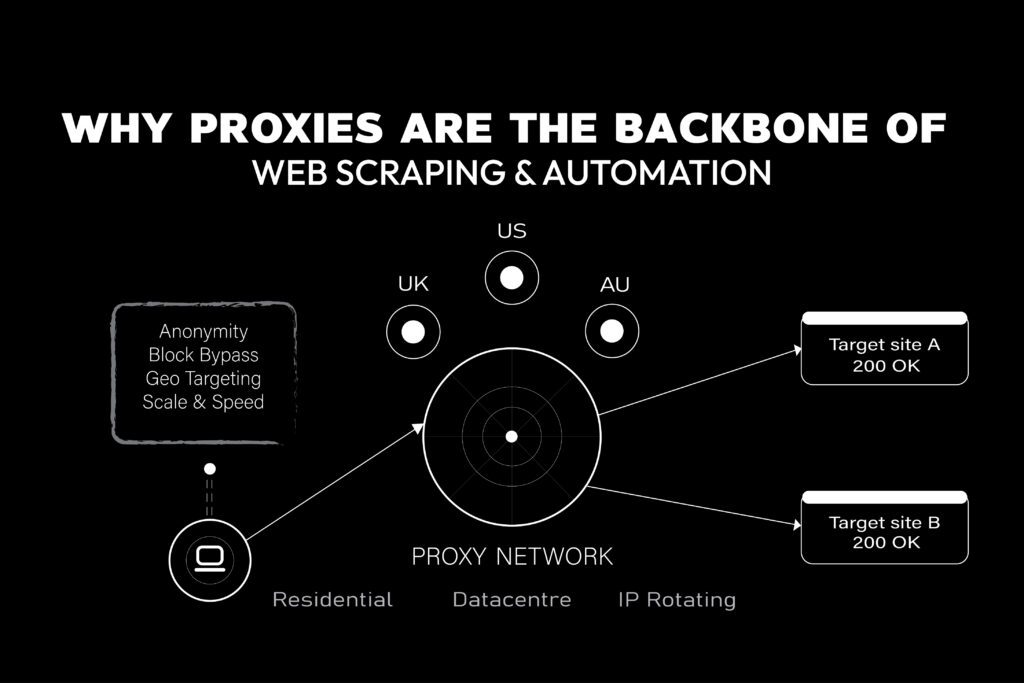
Why Proxies Are the Backbone of Web Scraping & Automation

If you’ve ever tried scraping a website or automating browser tasks at scale, you’ve run into a wall: IP bans, CAPTCHAs, and rate limits. Proxies are the solution. However, not all proxies are alike. Choosing the wrong type can waste money, get you blocked instantly, or deliver slow and unreliable results. This guide breaks down the three major proxy types used in web scraping and automation: ISP Proxies, Residential Proxies, and Mobile Proxies. We’ll cover what each one is, where it excels, its security profile, and ultimately, which one you should pick. Why You Need Proxies: Proxy Types Explained in Detail Each proxy type comes from a fundamentally different source, and that source determines everything: speed, trust level, price, and where it works best. ISP Proxies: ISP proxies are IP addresses assigned by real Internet Service Providers but hosted on data center hardware. They combine the legitimacy of a residential IP with the raw speed of a data center server. Because they’re registered with real ISPs, they appear as genuine home connections to websites, but they don’t rotate. They’re static, dedicated IPs you control. Best for: High-speed scraping, account management, SEO tools, SERP monitoring, tasks needing a consistent static IP. Residential Proxies: Residential proxies use IP addresses from real physical devices such as laptops, phones, and home routers of actual internet users who have opted into a network sharing program. ISPs assign these IPs to real people. Websites see these requests as coming from a real human browsing from home. They have the highest trust level, making them nearly impossible to block without collateral damage. Best for: eCommerce scraping, travel data, ad verification, and general web scraping where trust matters most. Mobile Proxies Mobile proxies route traffic through real mobile devices connected to 4G or 5G networks. Since mobile IPs are shared by thousands of real users on carrier networks, websites are extremely reluctant to block them. Blocking a single mobile IP could mean blocking thousands of legitimate users, making mobile proxies the hardest type to ban. Best for: Social media scraping, heavily protected platforms, mobile app testing, carrier-level geo-targeting. Where Each Proxy Type Works Best The right proxy depends on your target website, request volume, budget, and whether you need consistent IPs or rotating ones. The table below maps common scraping scenarios to the best proxy type: Use Case ISP Proxies Residential Mobile E-commerce price scraping Great Great Overkill Social media scraping Blocked often Good Best Account management Best (static IP) Risky (rotates) Possible Google SERP scraping Good Good Overkill Ad verification/geo Good Great Best mobile Sneaker/ticketing bots Good speed Good Best trust JavaScript-heavy SPAs Not suitable Not suitable Not suitable High-volume static scraping Best balance Slower + costlier Too expensive Travel/flight data Works on some Best Great How Secure & Trusted Is Each Proxy Type? Modern websites use sophisticated bot detection that scores every connection on multiple factors: IP reputation, ASN origin, behavioral patterns, TLS fingerprinting, and more. Here’s how each proxy type scores on a 10-point trust scale: Proxy Type Score Mobile Proxies 9.5/10 Residential 8.5/10 ISP Proxies 7.5/10 Security Deep Dive ISP Proxies: Their biggest vulnerability is a limited pool of IPs. A determined website can build a blocklist of known ISP proxy subnets. However, because they’re registered with real ISPs (not data centers), they evade ASN-based blocking that catches cheap data center proxies. Residential Proxies: The massive pool size (millions of IPs) is their greatest security advantage. Even if some IPs get flagged, rotation moves you to a fresh, clean IP. Make sure you confirm the terms for opting in from the service provider to avoid getting yourself into trouble. Mobile Proxies: Carrier IPs (CGNAT: Carrier-Grade NAT) are shared among thousands of real users simultaneously. Blocking one would affect thousands of legitimate users, making mobile proxies extremely resilient to blacklisting. If you can only pick one, which should it be? This is the only honest answer. But if forced to choose a single proxy type that covers the broadest range of real-world scraping scenarios, the winner is clear:“Residential Proxies” When to Choose a Different Type: Not all scenarios call for residential proxies. Here is when to pick a different type: Side-by-Side Comparison at a Glance Feature ISP Residential Mobile Speed Very Fast Moderate Variable Trust Level 7.5/10 8.5/10 9.5/10 IP Pool Thousands Millions Limited IP Type Static Rotating Rotating JS Rendering No No No CAPTCHA Solving No No No Best For Account management General use Social media Cost (approx.) $2-8/IP/mo$2-8/IP/mo $5-15/GB $20-60/GB Difficulty Easy Easy Medium GET IN TOUCH Get in touch with Scraping Solution Proxies in Web Scraping and Automation