Blogs

Types of Leads Data

3 Different Types of Lead Data That Create Actual Conversions in Contemporary Selling 

Choosing the Right Data Strategy  Today, the sales world is not like that one decade ago. Not all leads are created equally. While many businesses are focused on generating more leads, the truth is that only a handful of data types are effective at driving conversions for your business. Whether you’re looking at enterprise-level deals or trying to reach a high volume of consumer leads, different types of data are used for different purposes.  At Scraping Solution, we enable businesses to build automated data pipelines to continuously gather and deliver the correct type of lead information to your sales teams.  In this article, we’ll explore the importance of 3 types of lead data: B2B, B2C, and intent-based leads.  B2B Leads (Business to Business)  B2B Leads is information about businesses and business decision-makers, such as individuals with the authority to make purchasing decisions.  Examples:  Why B2B Leads Matter  B2B leads can be at the heart of any business strategy, particularly for businesses offering service-based software or solution-based products.  Pros:  High-value deals and larger deal sizes  Potential for long-term business relationships  Better returns on investment in the long term  Cons:  Long sales cycles  Needs a personalized approach  Difficult to verify without proper tools  Best Use Case: Best suited for businesses targeting enterprise businesses, SaaS businesses, service-based businesses, etc.  Scraping Solution builds custom scraping systems to extract verified decision-maker data from multiple sources, ensuring your outreach targets real, active professionals, not outdated contacts.  B2C Leads (Business-to-Consumer)  B2C leads to a focus on individual consumers rather than organizations. These are typically used for mass outreach campaigns and direct sales.  Examples:  Why B2C Leads Matter  B2C allows businesses to reach a larger audience quickly, making them suitable for promotions, campaigns, and product-based businesses.  Pros:  Cons:  Best Use Case:  Perfect for eCommerce stores, digital products, and consumer-focused brands.  Intent-Based Leads  The most valuable leads are those based on user intent, as they represent people actively looking for a product or service.  Examples:  Users searching for keywords  Users visiting product pages  Users comparing competitors  Why Intent-Based Leads Matter  Intent-based leads have in-built purchasing signals, thus increasing the chances of conversion.  Pros:  High conversion potential  Purchase intent  Sales-ready leads  Cons:  Hard to obtain without advanced tools  Requires real-time tracking of user data  Requires real-time tracking of user data  Scraping Solution has expertise in real-time scraping solutions, tracking market signals, competitor actions, and user actions.  Best Use Case:  Best for businesses focused on performance marketing, high-conversion funnels, and competitive targeting.  Through automated data pipelines, Scraping Solution continuously updates consumer datasets, removes duplicates, and ensures your campaigns are powered by fresh and accurate customer data.  Choosing the Correct Approach to Lead Data Collection  The best companies do not depend solely on any single kind of lead data but rather use all three approaches:  Using Scraping Solution, you can merge all three kinds into a streamlined process through automation.  Conclusion  In contemporary sales operations, the focus is no longer on accumulating more leads; instead, the key lies in acquiring the appropriate leads.  Through the utilization of business-to-business (B2B), business-to-consumer (B2C), and intent-based lead generation techniques, combined with automation tools in their pipeline, companies can achieve greater efficiency and productivity.  Here at Scraping Solution, we work as your data processor, converting fragmented online information into reliable and valuable leads that generate income. 

School Databases – How to Build, Buy & Use Education Data for Targeted Outreach

Why School Databases Are Essential for Education-Focused Businesses If your business targets schools, educators, or education institutions, then a well-structured school database is one of the most powerful assets you can have. Whether you’re offering: You need accurate, segmented access to schools and decision-makers. Without it, your outreach becomes generic, inefficient, and expensive. What Is a School Database? A school database is a structured dataset containing information about educational institutions and their key contacts. It may include: This data is used for targeted outreach, partnerships, research, and lead generation. Types of School Databases 1. Public School Database Includes government-funded schools with large student populations. 2. Private School Database Focuses on independent institutions, often with higher purchasing power. 3. International School Database Targets globally operating schools, ideal for premium services and products. 4. Higher Education Database Includes colleges, universities, and training institutes. 5. K-12 Database Covers primary and secondary schools, most common for outreach campaigns. Why Businesses Use School Databases A high-quality school database allows organizations to: ✔ Reach decision-makers directly✔ Target by school type and size✔ Reduce marketing waste✔ Improve campaign conversion rates✔ Scale outreach across regions For example, an EdTech company can target only private schools in London with 500+ students, instead of sending mass emails blindly. School Database vs School Email Database Feature School Database School Email Database Scope Full dataset Email-focused Use Research + targeting Direct outreach Fields Multiple attributes Primarily email Value Strategic Tactical A school email database is a subset used specifically for communication. Key Features of a High-Quality School Database 1. Accurate & Verified Data Outdated school data leads to: 2. Strong Segmentation You should be able to filter by: 3. Clean Data Structure Your database should be: 4. Regular Updates Schools change staff, emails, and structures frequently.Without updates, data loses value quickly. How to Use School Databases Effectively Lead Generation Reach school administrators, principals, and decision-makers. Product Sales Sell: Partnerships Collaborate with schools for: Recruitment Target teachers and staff for hiring. Market Research Understand: Common Mistakes When Using School Databases ❌ Sending generic emails to all schools❌ Not segmenting by school type❌ Using outdated contact details❌ Over-emailing without value❌ Treating schools like general businesses Education outreach requires precision and relevance. How to Build a School Database Option 1 – Manual Collection Option 2 – Web Scraping Extract data from: Option 3 – Buy or Outsource Fastest way to scale: Compliance & Ethical Considerations When using school databases: Trust is critical in the education sector. Who Needs School Databases? This data is highly valuable for: Future of School Data & Education Marketing Education data is evolving toward: Companies using structured school data today will dominate education marketing tomorrow. Final Thoughts A school database is not just a list, it’s a gateway to one of the most structured and high-value sectors. When used correctly, it allows you to: The difference between failed campaigns and consistent growth often comes down to one thing: The quality of your data.

data mining solutions dashboard with analytics visualization

Data Mining Solutions – How Businesses Turn Raw Data Into Actionable Intelligence

Why Data Mining Solutions Are Critical for Modern Businesses Every business today generates and interacts with massive amounts of data, from customer behavior to market trends. But raw data alone has no value unless it is transformed into insights. That’s where data mining solutions come in. Companies that leverage structured data mining systems can: Without proper data mining, businesses are essentially data-rich but insight-poor. What Are Data Mining Solutions? Data mining solutions refer to technologies, processes, and systems used to extract meaningful patterns, correlations, and insights from large datasets. These solutions combine: The goal is to convert raw, unstructured data into actionable intelligence. Data Mining vs Data Analysis – What’s the Difference? Aspect Data Mining Data Analysis Purpose Discover patterns Interpret data Scope Large-scale datasets Structured datasets Approach Automated, algorithmic Manual + tools Output Predictions & trends Reports & insights Data mining is proactive discovery, while analysis is interpretation. Role of Data Mining in Business Intelligence What Is Data Mining Business Intelligence? Data mining business intelligence combines data mining techniques with BI systems to enable: Instead of relying on historical reports, businesses can anticipate trends and act early. How Data Mining Enhances Business Intelligence 1. Predictive Insights Forecast future outcomes based on past data patterns. 2. Customer Segmentation Identify high-value customer groups. 3. Fraud Detection Detect anomalies and unusual behavior. 4. Operational Optimization Improve workflows and efficiency. 5. Revenue Growth Identify opportunities hidden within data. Types of Data Mining Solutions 1. Predictive Data Mining Forecast trends such as customer churn or demand. 2. Descriptive Data Mining Understand what has happened in the past. 3. Prescriptive Data Mining Recommend actions based on insights. 4. Text & Web Data Mining Extract insights from online content, reviews, and web data. How Businesses Use Data Mining Solutions Marketing & Customer Insights Sales Optimization Finance & Risk Management E-commerce & Retail Healthcare & Research Key Features of Effective Data Mining Solutions 1. Data Integration Combine multiple data sources into one system. 2. Scalability Handle large volumes of structured and unstructured data. 3. Automation Reduce manual data processing efforts. 4. Accuracy & Validation Ensure reliable insights and predictions. 5. Visualization Present insights in dashboards and reports. Benefits of Implementing Data Mining Solutions ✔ Better decision-making✔ Faster access to insights✔ Improved customer targeting✔ Increased operational efficiency✔ Competitive advantage✔ Higher ROI on marketing efforts Businesses that invest in data mining systems consistently outperform those that don’t. Common Challenges in Data Mining Despite its advantages, businesses often face: Data Quality Issues Incomplete or inaccurate data reduces insight quality. Integration Problems Multiple systems may not connect easily. High Initial Setup Cost Advanced systems require investment. Skill Gaps Data mining requires technical expertise. How to Choose the Right Data Mining Solution When evaluating providers or tools, consider: ✔ Type of data you handle✔ Volume and scalability needs✔ Integration with existing systems✔ Level of automation required✔ Customization options✔ Ongoing support and maintenance The right solution should align with your business goals, not just technical features. Data Mining Solutions vs Traditional Reporting Feature Traditional Reporting Data Mining Solutions Focus Past performance Future predictions Speed Slower Real-time Insights Limited Deep & predictive Value Informational Strategic Modern businesses need predictive insights, not just reports. Future of Data Mining Business Intelligence The future of data mining business intelligence is driven by: Organizations that adopt these technologies early will gain a strong competitive edge. Frequently Asked Questions What are data mining solutions? Systems and tools used to extract patterns and insights from large datasets. How does data mining support business intelligence? It enables predictive analytics, customer insights, and better decision-making. Is data mining suitable for small businesses? Yes, scalable solutions make it accessible to businesses of all sizes. What industries benefit most from data mining? E-commerce, finance, healthcare, marketing, and SaaS industries benefit significantly. Do data mining solutions require technical expertise? Yes, but many providers offer managed solutions to simplify implementation. Final Thoughts Data is one of the most valuable assets a business can have, but only if it’s used correctly. Data mining solutions transform raw data into insights that drive: When combined with data mining business intelligence, businesses move from reactive reporting to predictive, strategic operations.

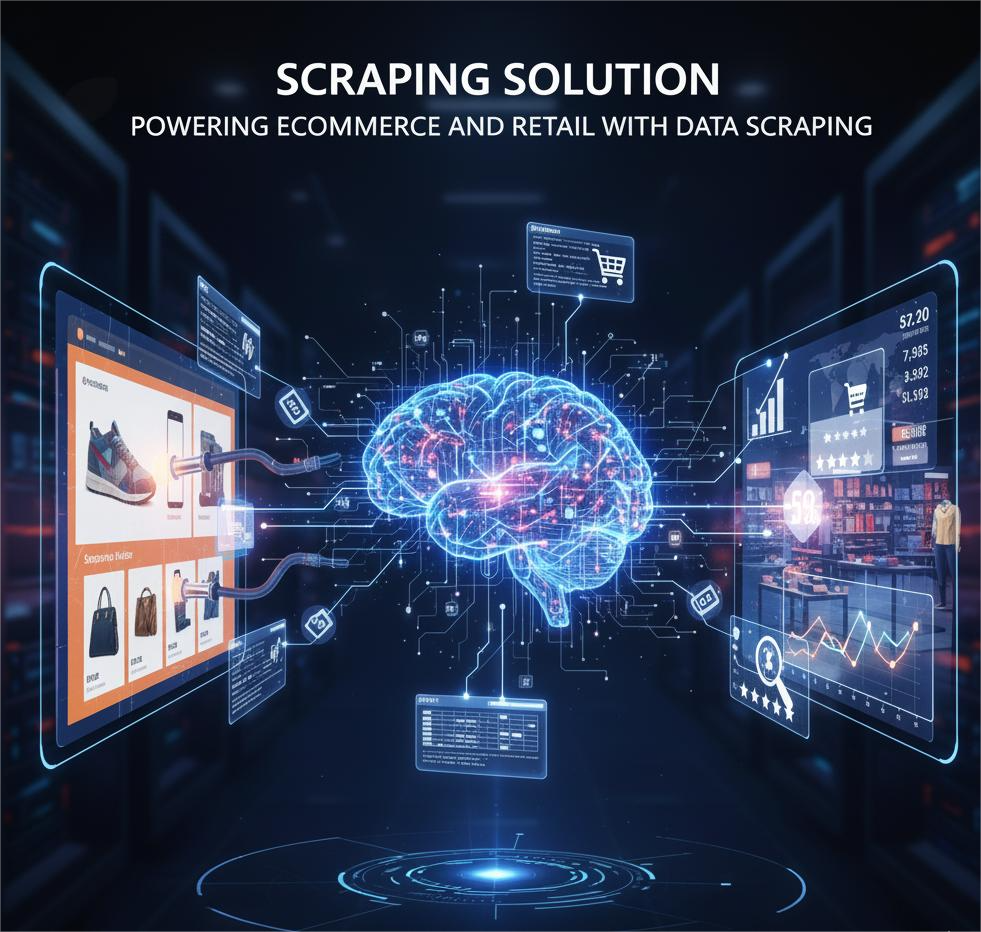
Scraping Solution – Empowering E-commerce and Retail with Data.

How Scraping Solution is powering eCommerce and Retails with Data Scraping.

The fast-paced world now requires the right information at the right time. Success no longer relies solely on great products or attractive pricing, but rather it’s about making data-driven decisions that anticipate consumer demand, optimize operations, and outperform rivals. Whether it could be for transportation, fintech, real tech, e-commerce and retail, or the educational sector. Manual data collection is not an option anymore. Hence, with a solution to the manual data collection, web scraping arises with automation techniques for extracting data from websites. This is where Scraping Solution comes in, empowering businesses with the tools and insights they need to stay ahead through advanced web scraping and automation.  Scraping Solution has been working in the tech market for the last 15+ years and provides e-commerce and retail businesses with the data they need to stay ahead of the curve. This article will explore what data scraping is. Why is it important for e-commerce? We’ll see how Scraping Solution assists e-commerce and retail businesses by scraping data. Why Data Scraping Matters for eCommerce Real-time information is essential to e-commerce. The internet economy is constantly evolving, from shifting consumer preferences to changing product costs. In addition to being time-consuming, manual tracking is also prone to mistakes. By automating data collection from rivals, marketplaces, and consumer channels, web scraping closes this gap and produces precise, organized, and useful insights. Here’s a look at how Scraping Solution assists e-commerce and retail businesses by scraping data. 1. Competitive Intelligence and Pricing Strategy Competitive analysis is the most popular and significant application of web scraping in e-commerce. Our offerings enable companies to: 2. Enhancing Product Development and Research Scraped data provides a wealth of information to improve your goods and services, not just pricing. 3. Improving SEO and Marketing Web scraping is an effective marketing technique in addition to being used for operations and pricing. Though the process of web scraping is simple, doing it at scale for e-commerce websites is complicated. E-commerce websites have multiple anti-bot strategies, such as CAPTCHA, IP blocking, and ever-changing layouts of the website, employed by them to avoid data extraction. Scraping Solution’s Edge Scraping Solution is not merely a scraping service but a business ally for companies that want to leverage the power of data. Our services are designed to address the unique needs of e-commerce and retail, providing: Conclusion The future of e-commerce lies in the hands of companies that make data their strength. Retailers are not only keeping up but also setting the pace with Scraping Solution. By converting raw online data into actionable intelligence, Scraping Solution helps businesses lead the pack in today’s highly competitive retail scene.

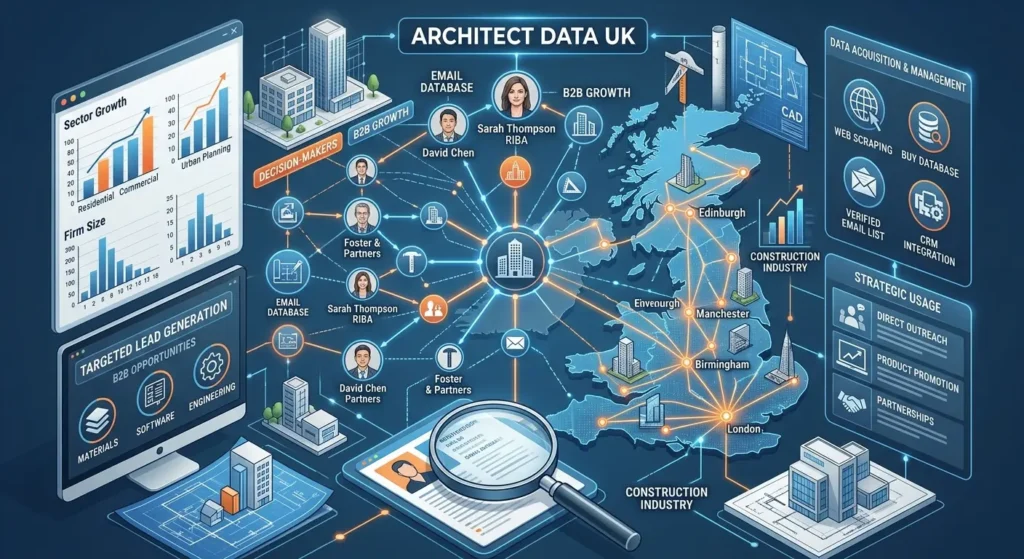
Architect Data UK – How to Access, Build & Use Targeted UK Architect Databases for B2B Growth

Why Architect Data in the UK Is Highly Valuable If your business targets the construction, property, or design industry, having access to architect data UK is one of the most powerful growth levers you can use. Architects are key decision-makers and influencers in projects involving: This means reaching architects directly can unlock high-value B2B opportunities. What Is Architect Data UK? Architect data UK refers to structured information about architecture professionals and firms operating across the United Kingdom. It typically includes: This data is used for lead generation, partnerships, outreach, and market research. What Is an Architects Email Database UK? An architects email database UK is a refined dataset focused specifically on verified email contacts of architects and firms. It enables: ✔ Direct B2B outreach✔ Product promotion (materials, software, tools)✔ Partnership opportunities✔ Event and webinar invitations✔ Industry-specific marketing campaigns Because architects operate in a niche professional environment, targeted communication performs significantly better than generic campaigns. Why Businesses Use Architect Data UK 1. Access to High-Value Decision-Makers Architects influence or directly decide on: This makes them a high-impact audience. 2. Precise Industry Targeting Unlike general B2B lists, architect data allows segmentation by: This precision leads to higher engagement and conversions. 3. Strong ROI on Outreach Campaigns When you reach the right professionals, you reduce: And increase: Key Features of a High-Quality Architect Database UK ✔ Verified Contact Data Ensures emails are deliverable and accurate. ✔ Detailed Segmentation Filter by: ✔ Regular Updates Architecture firms evolve, data must stay current. ✔ Structured Format Ready for CRM, email tools, or sales pipelines. How to Use Architect Data UK Effectively Lead Generation Reach architecture firms for: Product Promotion Promote: Partnership Development Collaborate with architects on: Event Marketing Invite architects to: Common Mistakes When Using Architect Data ❌ Sending generic, non-personalized emails❌ Not segmenting by project type❌ Using outdated contact information❌ Over-emailing without value❌ Treating architects like general business leads Architects respond best to relevant, value-driven communication. How to Build an Architect Database UK Option 1 – Manual Research Option 2 – Web Scraping Extract data from: For these hire us Option 3 – Buy or Outsource Fastest approach: Compliance & Ethical Considerations When using architect data UK: Trust is critical in professional industries. Who Should Use Architect Data UK? This data is valuable for: If you sell into the construction or design ecosystem, this data is essential. Future of Architect Data & B2B Outreach The future is moving toward: Businesses that leverage structured architect data today will dominate tomorrow’s B2B landscape. Final Thoughts A well-built architect data UK system is more than just a list, it’s a direct channel to one of the most influential professional groups in construction and design. When supported by a targeted architects email database UK, it allows you to: In a competitive UK market, precision targeting is everything, and it starts with the right data.

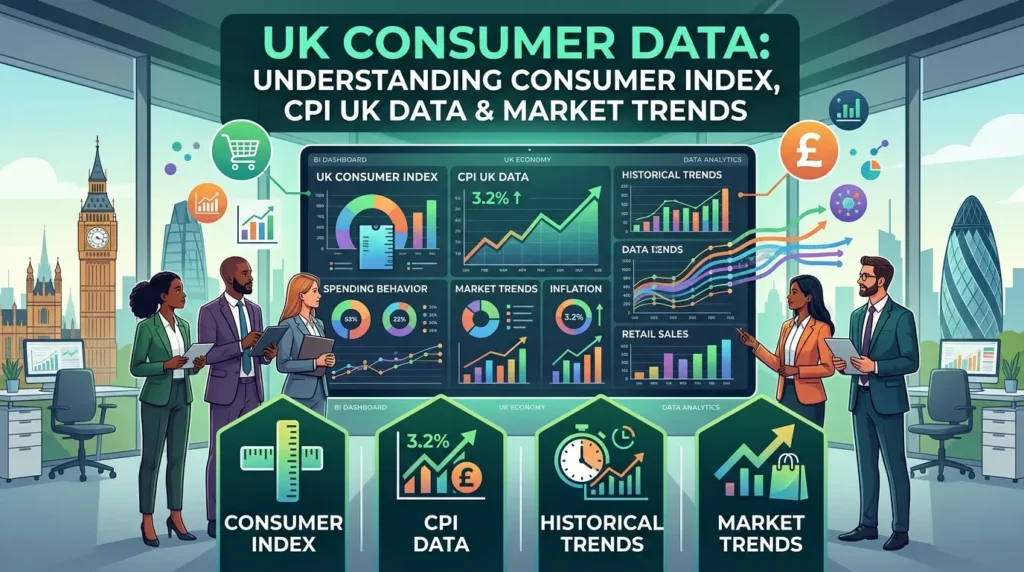
UK Consumer Data – Understanding Consumer Index, CPI UK Data & Market Trends

Why UK Consumer Data Matters for Businesses and Analysts In today’s data-driven economy, understanding UK consumer data is essential for businesses, investors, marketers, and policymakers. Consumer data reveals: Whether you’re running marketing campaigns, setting pricing strategies, or analyzing markets, consumer insights drive better decisions. What Is UK Consumer Data? UK consumer data refers to aggregated information about how individuals in the United Kingdom spend, save, and interact with products and services. It includes: This data is often collected through surveys, retail tracking, and government reporting systems. What Is the Consumer Index UK? The consumer index UK is a general term referring to indicators that measure changes in consumer behavior and prices. The most widely used and important index is the: Consumer Price Index (CPI) What Is CPI UK Data? CPI UK data (Consumer Price Index) measures the average change over time in the prices of goods and services purchased by households. It is one of the most important economic indicators in the UK. CPI Tracks: Why CPI UK Data Is Important CPI directly affects: For businesses, it influences pricing strategy and demand forecasting. Understanding UK CPI Historical Trends What Is UK CPI Historical Data? UK CPI historical data shows how inflation has changed over time, helping businesses and analysts identify patterns and trends. Why Historical CPI Data Matters 1. Trend Analysis Understand long-term inflation patterns. 2. Forecasting Predict future price movements. 3. Market Strategy Adjust pricing and positioning. 4. Investment Decisions Assess economic stability and risk. Example Insight If inflation rises: How Businesses Use UK Consumer Data 1. Marketing & Targeting 2. Pricing Strategy Use CPI and consumer trends to: You can hire here 3. Demand Forecasting Predict: 4. Product Development Understand what customers want and adapt offerings accordingly. 5. Business Intelligence Combine data mining + consumer data to generate deeper insights. Consumer Index UK vs CPI – What’s the Difference? Metric Consumer Index UK CPI UK Definition Broad term Specific indicator Scope Multiple indicators Price inflation only Use General analysis Official inflation measure CPI is the most widely used consumer index in the UK. Key Sources of UK Consumer Data Reliable UK consumer data is sourced from: Businesses often combine multiple sources for a complete picture. Challenges in Using UK Consumer Data Data Complexity Large datasets require analysis tools. Accuracy & Timeliness Outdated data leads to poor decisions. Interpretation Data must be translated into actionable insights. Integration Combining multiple data sources can be difficult. How to Leverage UK Consumer Data Effectively ✔ Focus on relevant metrics (CPI, spending trends)✔ Combine historical and real-time data✔ Use segmentation for targeted strategies✔ Integrate data into BI tools✔ Continuously monitor trends Future of UK Consumer Data & Analytics The future of UK consumer data is driven by: Companies that leverage these technologies gain a strong competitive advantage. Frequently Asked Questions What is UK consumer data? Data that reflects spending habits, behavior, and economic trends of consumers in the UK. What is the consumer index UK? A general term for indicators measuring consumer behavior and prices, including CPI. What is CPI UK data? The Consumer Price Index, which tracks inflation and price changes. Why is UK CPI historical data important? It helps analyze trends, forecast inflation, and guide business decisions. How can businesses use UK consumer data? For marketing, pricing, forecasting, and strategic planning. Final Thoughts Understanding UK consumer data is essential for making informed business and investment decisions. By leveraging: Businesses can move from reactive decision-making to proactive, data-driven strategies. In a rapidly changing economic environment, those who understand consumer behavior win.

7 Key Features that describe why human analysis is required for web scraping

Why Web Scraping Won’t Replace Human Analysis Web Scraping navigates through the web pages to collect and store data. It has now become a powerful tool for businesses and industries to collect vast amounts of data and make valuable insights from it. It is revolutionizing the industries by tracking competitors’ pricing, monitoring the latest trends, analyzing news and social media posts and sentiments, identifying potential customers, and collecting large datasets from heterogeneous sources. Although web scraping is a powerful tool, human analysis and judgment are far beyond its algorithms. Web scraping can’t replace the interpretations and suggestions that come with human intelligence to solve a critical problem. The following are some of the key reasons why web scraping and human analysis are not interchangeable. Web scraping excels at gathering raw data but cannot interpret the context. Web scraping extracts customer reviews and feedback without understanding the emotional undertones, cultural references, or slang language. Automating data collection has a probability of extracting irrelevant and inaccurate data or information. Human analysis and checking are essential to verify the accuracy of scraped data, identify anomalies and incorrect entries, and filter out noise. Ethical and legal considerations are essential to operate web scraping in various regions and industries. Here, human force is needed to ensure compliance with regulations, such as copyright laws and terms of service. Scrapers must be aware of what data should be collected without violating the rules and while ensuring data privacy regulations and website terms of service. Although web scraping provides raw data, changing it into valuable insights for strategic decision-making and following the latest trends needs to be done by human intelligence. Identifying unique market opportunities through patterns that may not be obvious to an algorithm. Apart from routine automation, algorithms may not adapt to unforeseen circumstances, such as changes in consumer behavior, changes in website structure, or global trends. Human analysis is needed to identify the relationship between data points and hidden patterns to create insightful decisions. Business decisions and strategies are often made upon human emotions, sentiments, and relationships that are not a part of an algorithm. Partnerships and making deals require understanding, empathy, trust, and interpersonal skills. Advancing customer experience requires building trust and loyalty that can’t be expected through a machine in this era. The evolution of human language introduced new words, slang, jargon, and different expressions. Automation scrapers face challenges in adapting to these, which may lead to inaccurate data extraction. Different industries and businesses come with unique requirements and complexities, and they want data to be in that format. Specializing in knowledge and different formats and figures makes humans efficient in interpreting and scraping data effectively. Conclusion: Web scraping is a valuable tool in tech for data extraction and processing large amounts of data. Although it is beneficial for industries and businesses to collect bulk data, it can’t fully replace the critical thinking, judgment, and creativity of human analysts. It mimics human web browsing behavior but lacks emotional intelligence, critical thinking, and empathy that only humans can provide. The web scrapers at Scraping Solution work beyond web scraping limitations. They’re trained to extract the required data by combining their intellectual properties with web scraping libraries and effective algorithms.

uk b2c data segmentation dashboard

UK B2C Data – High-Quality Consumer Data for Targeted Marketing

Why UK B2C Data Is Critical for Modern Consumer Marketing If your business targets consumers in the United Kingdom, access to accurate and structured UK B2C data is no longer optional, it’s a competitive requirement. Consumer behavior in the UK is highly segmented by: Without a reliable consumer data foundation, marketing campaigns rely on guesswork instead of precision. This guide explains: What Is UK B2C Data? UK B2C data refers to structured information about individual consumers residing in the United Kingdom, collected from publicly available and permission-based sources for marketing, research, and outreach purposes. It may include: The purpose is simple, enable businesses to identify and communicate with relevant consumer segments efficiently. What Are B2C Data Lists UK? While UK B2C data can exist as a continuously managed database, B2C data lists UK typically refer to segmented datasets prepared for targeted campaigns. These lists are often used for: A list is campaign-driven. A database is strategy-driven. Both play an important role in modern marketing systems. Why Businesses Invest in UK B2C Data Companies targeting the UK consumer market use B2C data for: ✔ Precision targeting✔ Reduced advertising waste✔ Higher email engagement✔ Improved ROI✔ Scalable campaign performance✔ Faster market entry In competitive markets like London, Manchester, Birmingham, and Glasgow, targeting accuracy directly affects profitability. Key Components of High-Quality UK B2C Data 1. Accurate Geographic Targeting Regional segmentation is crucial in the UK due to: High-quality UK B2C data enables postcode-level segmentation when needed. 2. Verified and Updated Consumer Information Consumer data changes frequently due to: Reliable providers maintain data refresh cycles to preserve accuracy. 3. Segmentation Capabilities Effective B2C data lists UK allow targeting by: Segmentation is what transforms data into revenue. How UK B2C Data Improves Campaign Performance Higher Engagement Rates Targeted campaigns based on relevant data outperform broad outreach significantly. Lower Customer Acquisition Costs When marketing is directed to consumers most likely to convert, advertising waste decreases. Personalization at Scale Using structured UK B2C data allows brands to tailor messaging by region, demographic group, or interest category. Improved Retention Strategies Data-driven segmentation enables lifecycle campaigns such as: Compliance Considerations for UK B2C Data Marketing within the UK requires strict attention to regulatory frameworks, including data protection standards and consent principles. Responsible data usage includes: Businesses must ensure their use of UK B2C data aligns with regulatory obligations. Common Questions About UK B2C Data Is UK B2C data legal to use? Yes, when sourced responsibly and used in accordance with applicable data protection regulations. What industries benefit most from B2C data lists UK? Any organization targeting UK consumers can leverage structured data effectively. What makes a high-quality B2C data list UK? How to Evaluate a UK B2C Data Provider Before selecting a provider, ask: ✔ How frequently is data updated?✔ What segmentation filters are available?✔ What format is the data delivered in?✔ Can the dataset integrate with CRM systems?✔ What quality checks are performed? If answers are unclear, the provider may lack operational maturity. Common Mistakes When Using UK B2C Data ❌ Sending generic campaigns without segmentation❌ Overusing purchased lists without nurturing❌ Ignoring regional personalization❌ Failing to refresh outdated datasets❌ Prioritizing volume over quality Effective marketers focus on structured targeting, not mass outreach. Building a Long-Term UK B2C Data Strategy The most successful brands treat UK B2C data as a strategic asset. Step 1: Define Target Profiles Clarify ideal consumer characteristics. Step 2: Segment Data Precisely Create micro-segments for tailored messaging. Step 3: Integrate With Automation Use CRM and marketing platforms to streamline campaigns. Step 4: Measure and Optimize Track engagement, conversion rates, and ROI. Future of UK Consumer Data Marketing The future of UK B2C data includes: Brands that structure their consumer data systems today will lead tomorrow’s market. Final Thoughts Access to reliable UK B2C data empowers businesses to move beyond generic advertising and into precision-driven marketing. When used strategically, B2C data lists UK provide the targeting power necessary to: In a competitive UK market, structured consumer data isn’t just helpful, it’s a measurable advantage. Learn more about our services at Scraping Solution

accountants database with segmented professional contacts

Accountants Database – How to Build and Use a Targeted Accountants Email Database for High-Value Outreach

Why an Accountants Database Is a Powerful Asset for B2B Growth Reaching accounting professionals is highly valuable for businesses offering financial services, software solutions, consulting, compliance tools, recruitment services, and B2B partnerships. However, generic outreach rarely works in this sector. A well-structured accountants database allows organizations to connect directly with verified professionals, firms, and decision-makers through targeted and relevant communication. Instead of chasing leads, you gain access to a curated audience already aligned with your offering. What Is an Accountants Database? An accountants database is a structured collection of professional information related to accounting firms, certified accountants, finance managers, auditors, and tax specialists. It typically includes: This dataset is used to power sales outreach, partnerships, recruitment, and niche marketing campaigns. What Is an Accountants Email Database? An accountants email database is a refined version of the broader dataset that focuses specifically on verified email contacts for direct communication. It enables: ✔ Targeted email marketing campaigns✔ Product announcements to relevant professionals✔ B2B lead generation✔ Event invitations and webinar promotions✔ Industry-specific service outreach Because accountants operate in trust-driven environments, personalized communication built on accurate data performs significantly better than cold, untargeted messaging. Why Businesses Use an Accountants Database 1. Direct Access to Decision-Makers Accountants often influence purchasing decisions related to: A targeted database ensures your message reaches professionals with real authority. 2. Highly Niche Targeting Opportunities You can segment outreach by: This precision dramatically improves engagement rates. 3. Stronger ROI Compared to Broad B2B Lists Generic business lists include contacts with no relevance to your offer. An accountants-focused dataset eliminates wasted outreach and increases conversion potential. Key Features of a High-Quality Accountants Email Database Not all datasets deliver value. A reliable database should include: ✔ Verified Contact Information Accuracy ensures deliverability and protects sender reputation. ✔ Segmentation Fields You should be able to filter by specialization, region, or firm size. ✔ Regular Updates Professional roles and firms change frequently; data must be refreshed. ✔ Structured, Ready-to-Use Format Data should integrate easily into CRM, email platforms, or analytics tools. How Companies Use an Accountants Database Effectively Lead Generation Campaigns Target accountants who may recommend or adopt your solutions. Partnership Development Build referral relationships with accounting firms serving aligned clients. Industry Research Analyze regional accounting landscapes and service demand. Recruitment & Talent Outreach Identify qualified finance professionals for hiring initiatives. Event and Webinar Promotion Invite niche audiences to educational or product-focused sessions. Best Practices for Using an Accountants Email Database To maximize results while maintaining professionalism: Accountants respond best to relevance and credibility. Common Mistakes to Avoid ❌ Using outdated or unverified email contacts❌ Sending overly promotional content without context❌ Ignoring segmentation opportunities❌ Treating accountants like general business leads❌ Failing to maintain data hygiene Precision matters more than volume in this professional audience. How to Evaluate an Accountants Database Provider Before choosing a dataset, consider: A transparent provider will clearly explain their methodology and structure. Long-Term Value of Building an Accountants-Focused Data Strategy Businesses that consistently engage accounting professionals build: Rather than running one-off campaigns, they create sustained engagement with a trusted professional audience. Final Thoughts An accountants database is not just a contact list, it’s a strategic channel to connect with one of the most influential professional groups in business decision-making. When supported by a well-maintained accountants email database, it enables precise outreach, meaningful partnerships, and scalable B2B growth. Organizations that invest in accurate, segmented accounting data gain a measurable advantage in targeting, trust-building, and conversion efficiency. You can get all these services at Scraping Solution

B2C Marketing Database – Build Targeted Consumer Data That Converts

B2C Marketing Database – The Growth Engine Behind High-Performance Customer Acquisition What Is a B2C Marketing Database? A B2C marketing database is a structured collection of consumer data used to identify, segment, and engage potential customers with personalized marketing campaigns. Unlike generic contact lists, a true B2C database connects behavioral insights, demographics, and engagement signals to help brands communicate with the right audience at the right time. It typically includes: When built correctly, it becomes the foundation of scalable, data-driven marketing. Why Businesses Depend on a B2C Marketing Database Today Modern marketing is no longer about reaching more people, it’s about reaching the right people. Brands use B2C databases to: ✔ Launch highly targeted campaigns✔ Reduce wasted ad spend✔ Improve personalization✔ Increase customer lifetime value✔ Drive predictable revenue growth Without structured consumer data, even the most creative campaigns struggle to convert. B2C Email Database vs. B2C Data Lists – What’s the Difference? Many businesses confuse these terms, but they serve different roles within your data strategy. Component B2C Email Database B2C Data Lists Purpose Ongoing marketing engagement Campaign-specific targeting Structure Continuously updated system Static dataset Usage Automation, nurturing, retention Promotions, outreach Value Long-term asset Tactical resource A B2C email database fuels lifecycle marketing, while B2C data lists are often used for focused acquisition campaigns. Key Elements of a High-Quality B2C Marketing Database 1. Verified Consumer Contact Data Accuracy is critical. Invalid or outdated data leads to poor deliverability and wasted marketing spend. 2. Segmentation Capabilities Effective databases allow marketers to group consumers by: 3. Behavioral Intelligence The most valuable B2C databases track how customers interact across channels, enabling predictive targeting. 4. Continuous Data Refresh Consumer data changes rapidly. A reliable system must update regularly to maintain relevance. How a B2C Email Database Drives Revenue Growth A well-maintained B2C email database transforms email from a broadcast tool into a precision marketing channel. Benefits Include: Email remains one of the highest-performing marketing channels because it is powered by owned data. How Businesses Use B2C Data Lists for Customer Acquisition B2C data lists are typically leveraged for: These lists provide scale, while your core database provides sustainability. Building a B2C Marketing Database – Best Practices Start With Clear Data Objectives Define what you need the data to accomplish: Focus on Data Quality Over Volume Large datasets mean little if they lack accuracy or segmentation. Structure Data for Usability Ensure information is organized for easy integration into CRM, analytics, and automation platforms. Maintain Compliance and Transparency Consumer trust is essential. Responsible data usage strengthens brand reputation and campaign effectiveness. Common Mistakes to Avoid ❌ Treating a one-time list as a long-term database❌ Ignoring segmentation and personalization❌ Allowing data to become outdated❌ Overloading campaigns without behavioral targeting❌ Prioritizing quantity instead of actionable insights Successful companies treat their B2C marketing database as an evolving asset, not a static file. Industries That Benefit Most From B2C Marketing Databases A strong consumer database powers growth across sectors: Any organization selling directly to consumers can unlock measurable advantages. The Future of B2C Marketing Databases As marketing becomes more data-centric, B2C databases are evolving into intelligent systems that: Businesses that invest in structured consumer data today are building a long-term competitive advantage. Final Thoughts A B2C marketing database is more than a collection of contacts, it is the infrastructure that powers modern customer acquisition and retention. When supported by a reliable B2C email database and strategically used B2C data lists, it allows businesses to move from mass marketing to precision engagement. Organizations that treat consumer data as a strategic asset consistently outperform those relying on fragmented outreach methods.