AI

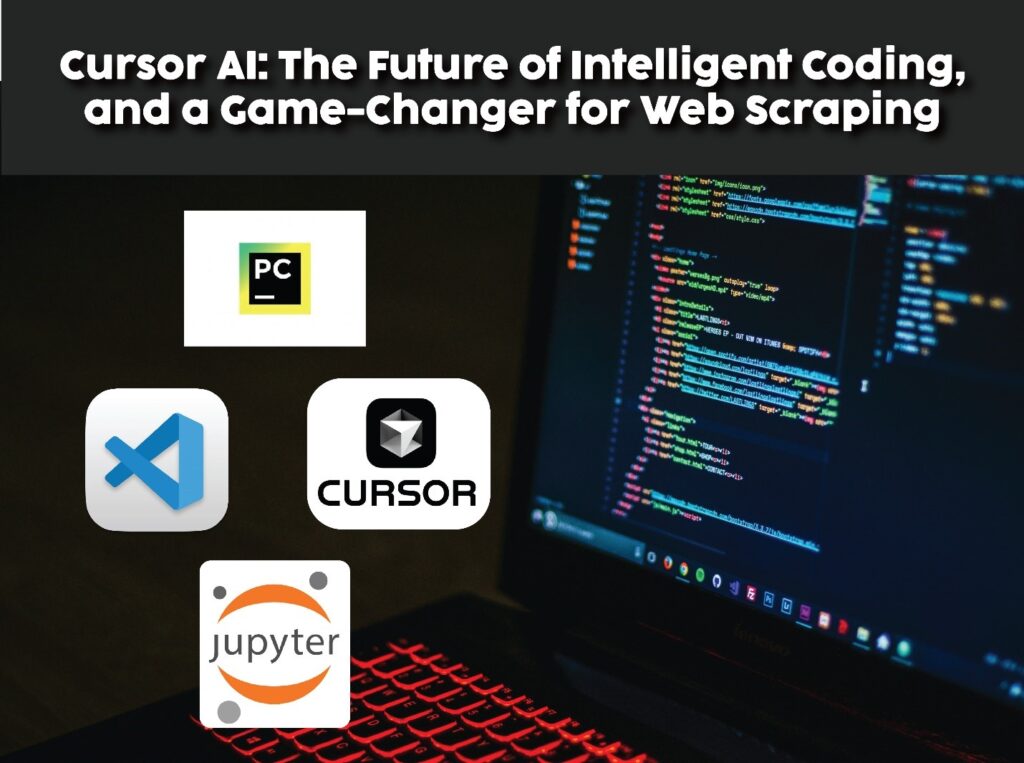
Cursor AI and the other IDEs for smart coding

7 Pros of Cursor AI That Will Reshape The Future of Intelligent Coding

It will become a game-changer for web scraping and automation We have seen Visual Studio Code dominating the IDE market by providing minimal solutions to developers and enhancing the coding experience. As the AI-driven tools increasingly influence software development, now is the time to witness the arrival of a new integrated development environment, Cursor AI, that will enhance the future of intelligent coding. This IDE stands out as one of the most transformative tools for modern developers. Cursor AI, released in March 2023 by the startup Anysphere, has quickly grown into an enterprise-grade AI-powered code editor utilized by major tech firms and developer teams worldwide. Although developed as a fork of Visual Studio Code (VS Code), Cursor incorporates cutting-edge AI to augment all aspects of the coding process, including writing, refactoring, debugging, and maintaining giant codebases. How is Cursor AI different from others? Cursor is not a mere AI extension for your code editor. It is an AI-native IDE, where artificial intelligence is integrated into the very fabric of the product. Leaning on sophisticated language models such as OpenAI’s GPT-4, Anthropic’s Claude, and internal, in-house models, Cursor provides: Cursor AI Core Features 1. AI Code Autocomplete Low-latency, smart code suggestions appear while the developer types. Contextual snippets are encrypted, sent, processed by the AI, and delivered within less than a second. 2. AI Chat Assistant Integrates a chat agent that can refactor code, debug bugs, or insert features across many files with natural language commands. It can also browse the web with the @web command to augment answers. 3. Inline Edit Mode Developers can mark up code blocks and command changes to edit, rewrite, or optimize them on the fly. 4. Bugbot (AI Code Review) GitHub-integrated Bugbot reviews pull requests, marks issues, provides fixes, and even jumps directly to Cursor for instant application. 5. Background Agents AI processes long-running or computationally intensive tasks in separate VMs in the cloud, permitting developers to work without interruption. 6. Persistent Project Memory By storing “Rules” and “Memories,” project-specific logic and style preferences, Cursor ensures continuity from session to session. 7. Codebase Indexing & Semantic Search Utilizing encrypted vector embeddings and a bespoke vector database (Turbopuffer), Cursor allows developers to semantically search and navigate their entire codebase while upholding privacy at each step. Cursor AI’s Impact on Web Scraping & Data Extraction Companies Cursor is particularly strong for web scraping businesses, whose codebases tend to be big and repetitive and must evolve rapidly as websites change frequently. Benefits for Web Scraping Teams: For web scraping teams, Cursor AI provides revolutionary benefits that simplify operations and increase productivity. It enables scripts with natural language prompts, and developers can create web scrapers for new sites in seconds. Whenever websites update their HTML structure, Cursor automatically adjusts by refactoring all associated scraping logic, saving hours of manual work. It automatically combines proxy and CAPTCHA handling services such as ScraperAPI, Playwright, and 2Captcha with automated templates. Multiple files can undergo bulk changes, i.e., changing HTTP libraries or parsing frameworks made to them with a single command. Debugging is easier with Bugbot, which helps spot issues such as infinite retries, missing selectors, and faulty loops. With capabilities like parallel editing and smart automation, teams can deploy hundreds of scrapers efficiently without expanding their workforce. Infrastructure and Privacy Cursor employs a blend of AWS, Fireworks, OpenAI, Claude, Azure, and GCP for model hosting, with vector embeddings stored by Turbopuffer. All the code is Conclusion Cursor AI is not another code editor; it’s the future of software programming. For web scraping businesses and data teams, it provides the speed, intelligence, and flexibility required to thrive in an ever-changing digital environment. From smart code generation to AI-powered QA and debugging, Cursor has the potential to become a must-have in every technical stack. At Scraping Solution, a company known for delivering tailored scraping services to global industries, the adoption of Cursor AI has dramatically enhanced delivery speed, reduced error rates, and improved scalability. From lead generation to competitor analysis, Cursor AI empowers Scraping Solution to provide more robust, adaptable, and cost-effective data extraction tools to its clients.

AI Agents and Web Scraping: The 3 Next Step in Intelligent Automation

Introduction: In the rapidly evolving digital landscape of today, AI Agents are among the most revolutionary technologies to emerge. These independent systems can perform tasks that previously needed human input. Empowering AI agents with reasoning and learning capabilities unlocks a future where intelligence is not just processed but truly understood and evolved. When blended with web scraping, AI agents are revolutionizing how data is collected, processed, and utilized, ushering in the next generation of smart and intelligent automation. What Are AI Agents, and Why Do They Matter? AI agents are computer programs created to sense their surroundings, decide, and act to accomplish certain objectives, all with little human intervention. Unlike conventional automation tools that execute predetermined scripts, AI agents evolve and learn from context and data; that’s why they’re the future of intelligent automation. In the technology and business world, such agents are currently applied to: Gartner Emerging Tech Report predicts that at least 15% of day-to-day work decisions will be made autonomously through agentic AI by 2028, up from 0% in 2024. Besides supporting the increase in automation due to AI agents, this report also shows the negative perspective. Gartner addresses a call for extreme caution and strategic discernment before investing heavily in agentic AI in its current nascent stage. The Intersection of AI Agents and Web Scraping Web Scraping is the process of retrieving useful information from the web, which has always been critical for companies looking for a competitive advantage. But with the introduction of AI agents into the mix, the possibilities grow exponentially. With scrapers powered by AI, data gathering turns from rule-based retrieval to informed comprehension. Rather than merely gathering facts, these agents can: This convergence enables companies to create self-upgrading data pipelines that are quicker, more precise, and more dynamic than any human-operated system. A Changing Market Landscape and Intelligent Automation World Across sectors, smart automation is turning into a major differentiator. Companies that previously invested hours upon hours in manual research are now looking to adaptive, AI-powered tools to remain competitive. E-commerce sellers employ AI scraping software to monitor price fluctuations and stock changes before they affect sales. They are used by digital marketers to grab live leads from various platforms and instantly segment audiences. And financial institutions depend on real-time data collected by intelligent agents to predict market patterns. The outcome is a marketplace that works with unprecedented accuracy, continuously learning and responding faster. Scraping Solution: Powering the Future of Automation At Scraping Solution, we’re not just building scrapers; we’re building intelligence. Our automation systems integrate AI agents into web scraping workflows, enabling businesses to collect, refine, and act on web data smarter than ever before. We help eCommerce, retail, and B2B companies transform raw information into insight through: The major goal of Scraping Solution is to make data simple, enabling businesses to lead the way, act more quickly, and concentrate on growth rather than labor. Looking Forward: The Emergence of Smarter Data Ecosystems The future of automation isn’t about replacing people; it’s about amplifying intelligence. As Artificial Intelligence Agents become more sophisticated, they will allow businesses to not only scrape up data but also comprehend its significance in real time. Decision-making won’t rely on reported data that lags; it will be real-time, based on smart, self-improving systems. Firms that accept this change early will establish the pace of speed, accuracy, and flexibility in the digital economy. Conclusion: The intersection of web scraping and AI agents is a milestone for business intelligence. It’s not about automation; it’s about building systems that think. At Scraping Solution, we’re helping companies step into that future, one intelligent data pipeline at a time. Read our previous blog, where we provided a comparative analysis of the performance, cost, features, and user-friendly options of DeepSeek and ChatGPT.  

Choosing between DeepSeek-R1 and ChatGPT for AI-powered automation and data projects

DeepSeek-R1 vs ChatGPT – Complete Guide to AI Performance

Comparing DeepSeek-R1 vs ChatGPT – Performance, Cost, and Accessibility Large Language Models (LLMs) have started a cyber war of achieving Artificial General Intelligence (AGI). ChatGPT and Deep Seek R1 are prominent large language models that have revolutionized the tech world by their potential, accuracy, achievements and efficiency. These models are reshaping the tech industry. In this article we’ll compare both the models at various proficiency levels. Developmental Origin: ChatGPT was launched in November 2022, by American research organization known for its advancements in artificial intelligence named OpenAI. OpenAI has several other models such as GPT-4, GPT-4o mini, o1 and o1 mini, GPT-4 turbo, GPT-3.5 Turbo, Whisper, Dall-e and much more. R1 was launched in January 2025, developed by Deep Seek a Chinese Company located in Hangzhou. Deep Seek is an AI company developing models to achieve Artificial General Intelligence (AGI). It has several other models like; DeepSeek-V3, DeepSeek-V2.5, DeepSeek-R1-lite, etc. Performance and Efficiency: The above image demonstrates the Accuracy/Percentile of models; DeepSeek-R1, OpenAI-o1, DeepSeek-R1-32B, OpenAI-o1-mini, and DeepSeek-V3. The first parameter taken in the above image AIME represents accuracy in solving advanced math problems. The analysis shows a 79.8 % score of DeepSeek-R1 while OpenAI-o1 model 79.2%.The Codeforces percentile represents programming and problem-solving capabilities. DeepSeek-R1 achieved an accuracy of 96.3% while OpenAI-o1 scored 96.6%.GPQA Diamond percentile demonstrating Question-Answer tasks. Here OpenAI-o1 achieved 75.7% surpassing DeepSeek-R1 which achieved 71.5%.The MATH-500 benchmarks math-solving capabilities. DeepSeek-R1 is ahead scoring a percentile of 97.3%, while OpenAI-o1 scored 96.4%.MMLU evaluates understanding across multiple knowledge domains. OpenAI-o1 outperforms by achieving 91.8% while DeepSeek-R1 scored 90.8%.SWE-bench Verified tests software engineering-related challenges. 49.2% scored by DeepSeek-R1 while 48.9% scored by OpenAI-o1. DeepSeek-R1 consistently outperforms major benchmarks as compared to other models. OpenAI models; o1 and o1-mini also performed well but lag slightly as compared to DeepSeek-R1. For businesses leveraging web automation and scraping services, performance and efficiency benchmarks are critical when selecting the right AI model. Cost Efficiency: DeepSeek-R1 excelled in cost efficiency as being approximately 27 times cheaper per token compared to OpenAI’s models. Deep Seek price for one million tokens starts at $0.14, which is much lower than OpenAI’s model, which costs $7.50 for the same token volume. DeepSeek-R1 model was trained at 6 million dollars, while GPT-4 cost over 100 million dollars, and Gemini reportedly cost over 200 million dollars. This makes a big difference for industries such as price comparison platforms and e-commerce management businesses, where large-scale data is processed daily. Openness and Transparency: DeepSeek-R1 is an open-source model, providing insight into their algorithms, architecture, and training processes. This allows developers, researchers, and organizations to access, modify, and build upon the model without restrictions. ChatGPT is a proprietary model, its underlying code, training methodologies, and data are not publicly accessible. While it provides APIs and user-friendly interfaces for implementation, users cannot directly access or alter the model’s inner workings. For enterprises working with Python data analysis and scraping consultancy, open-source accessibility is often a deciding factor. Censorship and Criticism: DeepSeek-R1 has faced criticism regarding censorship and data privacy. The model reportedly employs censorship mechanisms for topics considered politically sensitive in China, such as the 1989 Tiananmen Square protests and the status of Taiwan. ChatGPT has also faced scrutiny over data privacy and content moderation, it operates under different regulatory frameworks and has not been associated with the same level of censorship concerns. For businesses, ensuring data mining and compliance with global regulations is essential before adopting AI-driven solutions. Conclusion Scraping Solution research and some lab work concludes that both the models have a significance in the advancements in Artificial Intelligence. DeepSeek-R1 has offered a cost-effective, open-source alternative with comparable performance while ChatGPT benefits from the extensive resources and research backing of OpenAI. To discuss your data projects, explore scraping services or get a custom quote today.

Revolutionalize_Scraping

Revolutionizing Data Extraction

The Intersection of Artificial Intelligence and Web Scraping In the digital age, data is the new gold. Every industry, from e-commerce to finance, relies on vast amounts of data to make informed decisions and gain competitive advantages. With the proliferation of online content, web scraping has emerged as a critical tool for extracting valuable data from the web. However, the sheer volume and complexity of online data present significant challenges for traditional scraping methods. This is where artificial intelligence (AI) steps in, revolutionizing web scraping by enabling automated, intelligent data extraction at scale. Understanding Web Scraping Web scraping, also known as web harvesting or web data extraction, is the process of automatically collecting information from websites. Traditionally, this involved writing custom scripts or using scraping tools to navigate web pages and extract desired data elements. However, manual coding is time-consuming, error-prone, and limited in scalability, especially when dealing with large or dynamic websites. The concept of artificial intelligence in web scraping entails employing advanced algorithms and techniques to automate and optimize the extraction of data from websites. AI-driven scraping tools leverage machine learning, natural language processing, and computer vision to intelligently navigate through web pages, identify relevant content, and extract structured data accurately and efficiently. By analyzing webpage structures, understanding textual and visual content, and adapting to changes in website layouts, AI-powered scrapers can overcome challenges such as anti-scraping measures and dynamic web environments. This enables businesses to gather valuable insights from vast amounts of online data, enhance decision-making processes, and stay competitive in today’s data-driven landscape. The Role of Artificial Intelligence Artificial intelligence, particularly machine learning (ML) and natural language processing (NLP), has transformed the landscape of web scraping automation. By leveraging AI techniques, scraping tools can mimic human browsing behavior, understand webpage structures, and extract relevant information intelligently. Here’s how AI is revolutionizing web scraping: Automated Data Extraction: AI-powered scraping tools can automatically identify and extract data from web pages without explicit programming. These tools use machine learning algorithms to recognize patterns in webpage layouts and content, enabling them to extract structured data accurately and efficiently. Adaptive Scraping: Traditional scraping methods often fail when websites undergo layout changes or introduce new elements. AI-based scraping tools, however, can adapt to these changes by learning from past scraping experiences. Through continuous training and feedback loops, these tools can adjust their scraping strategies to maintain high accuracy and reliability over time. Content Understanding: One of the key challenges in web scraping is understanding unstructured or semi-structured content, such as text within articles or product descriptions. AI techniques, particularly natural language processing (NLP), enable scraping tools to parse and extract meaningful information from textual data. This includes identifying entities, extracting sentiment, and categorizing content, enhancing the quality and depth of scraped data. Anti-Crawling Bypass: Many websites deploy anti-scraping measures to prevent automated data extraction, such as CAPTCHA challenges or IP blocking. AI-powered scraping tools can circumvent these obstacles by dynamically adapting their scraping behavior to mimic human interactions. By simulating mouse movements, keyboard inputs, and session management, these tools can evade detection and access target websites more effectively. Visual Data Extraction: In addition to text-based content, AI enables scraping tools to extract information from images, videos, and other multimedia elements. Computer vision algorithms can analyze visual data, recognize objects or text within images, and extract relevant information for further processing. This capability is particularly valuable for e-commerce platforms, where product information often includes images and videos. Benefits of AI-Enhanced Web Scraping Web scraping, when enhanced with artificial intelligence (AI), offers a multitude of benefits across various industries and applications. Efficiency: AI-powered web scraping services automate the data extraction process, eliminating the need for manual intervention and repetitive tasks. Accuracy: Traditional web scraping methods may struggle with inaccuracies and inconsistencies, particularly when dealing with complex or dynamic websites. AI algorithms enhance the accuracy of data extraction by learning from past scraping experiences and adapting to changes in webpage layouts or content structures. Scalability: AI-driven web scraping frameworks are highly scalable, capable of handling large volumes of data from diverse sources simultaneously. Adaptability: Websites frequently undergo updates, redesigns, or layout changes, which can disrupt traditional scraping workflows. AI-powered tools can adapt dynamically to maintain reliability even in evolving environments. Content Understanding: AI techniques such as NLP and computer vision enable tools to understand and extract meaningful information from unstructured or semi-structured content. Anti-Crawling Bypass: Many websites implement anti-scraping measures to prevent automated data extraction. AI-powered scraping tools can bypass these by simulating human-like behavior. Data Quality Assurance: AI algorithms can improve the quality and consistency of scraped data by performing validation checks, error correction, and data deduplication tasks. Competitive Advantage: By leveraging AI-powered web scraping for market intelligence, competitor analysis, and trend monitoring, businesses can gain valuable insights and stay ahead in competitive markets. Applications of AI in Web Scraping The combination of AI and web scraping has wide-ranging applications across various industries: Market Research: Companies can use AI-powered scraping tools to gather market intelligence, monitor competitor activities, and track pricing trends. Financial Analysis: In the finance industry, AI-driven scraping tools are used to collect and analyze financial data from diverse sources, including regulatory filings and market websites. Lead Generation: AI-powered scraping tools enable marketers to automate lead generation processes by extracting contact information from directories, social networks, and other online sources. Content Aggregation: Publishers leverage AI-based scraping tools to collect and curate relevant content from across the web. Challenges and Ethical Considerations Despite its transformative potential, the use of AI in web scraping raises various challenges and ethical considerations: Data Privacy: Scraping sensitive or personal data from websites without proper consent may violate privacy regulations such as GDPR or CCPA. Intellectual Property: Scraping copyrighted or proprietary content without authorization may infringe upon intellectual property rights. Bias and Fair Use: AI algorithms used in web scraping may inadvertently perpetuate biases present in the training data or amplify existing inequalities. For guidance on responsible AI practices, refer to GOV.UK’s official AI regulation framework. Conclusion

Unveiling the Power of Web Scraping for SEO

Unveiling the Power of Web Scraping for SEO: A Comprehensive Guide to Analyzing Competitor Websites, Keyword Research & Backlink Analysis In the ever-evolving landscape of digital marketing, staying ahead of the competition is crucial for the success of any online business. Web scraping has emerged as a powerful tool for SEO professionals seeking a competitive edge by delving deep into competitor websites, extracting valuable data for keyword research, and conducting insightful backlink analyses. This comprehensive guide by Scraping Solution explores the nuances of web scraping in the context of SEO, shedding light on its applications in gaining strategic insights for your digital marketing endeavors. In the dynamic and fiercely competitive realm of online marketing, the quest for effective strategies to enhance Search Engine Optimization (SEO) has never been more critical. In this digital age, where information is king, SEO professionals are constantly seeking innovative ways to glean valuable insights and gain a competitive edge. One such powerful tool that has emerged at the forefront of this endeavor is web scraping—a technique that enables the systematic extraction of data from websites. This comprehensive guide aims to unravel the potential of web scraping as an indispensable asset in the SEO toolkit. By focusing on its application in analyzing competitor websites, conducting meticulous keyword research, and delving into insightful backlink analyses, we explore how data mining can elevate your SEO strategies to new heights. As we embark on this journey, we will delve into the ethical considerations surrounding scraping consultancy, ensuring a responsible and legal approach to data extraction. Through a detailed exploration of its applications, we aim to equip SEO professionals with the knowledge and tools needed to harness the power of web scraping strategically. Whether you are a seasoned SEO veteran or a newcomer to the field, this guide serves as a roadmap to understanding how web scraping can transform the way you approach SEO. By the end, you will have gained insights into the nuances of competitor analysis, honed your keyword research methodologies, and mastered the art of leveraging web scraping for a comprehensive backlink analysis. Join us as we unveil the capabilities of web scraping, providing you with the knowledge and tools to not only keep pace with the ever-evolving digital landscape but also to proactively shape your SEO strategies, ensuring sustained success in the competitive online ecosystem. 1. Understanding Web Scraping: Web scraping involves the automated extraction of data from websites, enabling SEO professionals to collect and analyze information that can be pivotal for devising effective strategies. However, it is essential to approach web scraping ethically and responsibly, adhering to legal and ethical guidelines as outlined by the UK Government’s Data Ethics Framework. 2. Analyzing Competitor Websites: A. Identifying On-Page SEO Elements:Extracting Metadata: Web scraping allows for the extraction of meta tags, titles, and descriptions from competitor websites, providing insights into their on-page optimization strategies.Scrutinizing Content: Analyzing the structure, formatting, and quality of competitor content helps in understanding their approach to content creation and user engagement. B. Monitoring Site Changes:Tracking Product Updates: Web scraping enables real-time monitoring of competitor product pages, revealing changes in offerings, pricing, and promotions.Following Content Updates: By regularly scraping competitor blogs and resource pages, SEO professionals can stay informed about new content, identifying trends and gaps. 3. Extracting Data for Keyword Research: A. Uncovering Target Keywords:Scraping Meta Keywords: Extracting meta keywords from competitor websites provides insights into their targeted terms and phrases.Analyzing Content Keywords: Scrutinizing the body content of competitor pages helps identify keywords they are focusing on. B. Discovering Long-Tail Opportunities:Scraping Related Terms: Extracting related terms and phrases from competitor content aids in discovering long-tail keyword opportunities.Analyzing User Queries: Scraping competitor FAQ pages and customer support sections reveals common user queries, guiding your content strategy. For advanced analysis, you can also explore Python data analysis and web automation for keyword tracking and performance visualization. 4. Conducting Backlink Analysis: A. Identifying Backlink Sources:Extracting Inbound Links: Web scraping helps in collecting data on backlinks pointing to competitor websites, revealing their link-building strategies.Analyzing Anchor Texts: Scrutinizing anchor texts of competitor backlinks provides insights into the keywords they are targeting. B. Evaluating Link Quality:Assessing Domain Authority: Web scraping facilitates the extraction of domain authority metrics, helping gauge the quality of competitor backlinks.Monitoring Link Velocity: Tracking the growth of competitor backlinks over time aids in understanding the effectiveness of their link-building efforts. To stay updated with international SEO developments, refer to BBC Technology insights on digital trends. Conclusion: In conclusion, the integration of web scraping into SEO strategies offers a wealth of opportunities for digital marketers aiming to elevate their online presence and outperform competitors. By ethically and responsibly harnessing the power of data mining, businesses can gain unprecedented insights into competitor websites, refine their keyword research methodologies, and conduct thorough backlink analyses. The depth of understanding achieved through web scraping empowers SEO professionals to make informed decisions, uncover hidden opportunities, and adapt strategies in real-time. From dissecting on-page elements and monitoring dynamic changes on competitor sites to extracting valuable data for targeted keyword research and backlink analysis, web scraping emerges as a versatile and indispensable tool in the SEO arsenal. As the digital landscape continues to evolve, staying ahead of the curve requires not only creativity and expertise but also the ability to harness cutting-edge technologies. Web scraping, when wielded with a commitment to ethical practices, becomes a catalyst for innovation and strategic excellence in the competitive world of digital marketing. In essence, the comprehensive guide presented here serves as a roadmap for SEO professionals to navigate the intricacies of web scraping, enabling them to unlock the full potential of data-driven decision-making. By embracing this powerful tool, businesses can not only keep pace with the ever-changing SEO landscape but also proactively shape their online presence, ensuring sustained growth and visibility in the digital realm. Written By:Umar Khalid CEO:Scraping Solution follow us on Facebook Linkedin Instagram

Pakistan Surges Ahead in Software Development: Ranked Third Globally with 42.6% Growth on GitHub

Pakistan Surges Ahead in Software Development: Ranked Third Globally with 42.6% Growth on GitHub In a remarkable turn of events, Pakistan has emerged as a rising powerhouse in the realm of software development, securing the third position globally in terms of active software developers on GitHub. GitHub, the world’s leading platform for version control and collaboration among developers, recently released statistics indicating a staggering 42.6% growth in the number of active software developers in Pakistan. Rapid Growth in Software Development: The substantial increase in active software developers reflects Pakistan’s commitment to nurturing a tech-savvy workforce and fostering an environment conducive to innovation. The government’s initiatives, coupled with the efforts of the private sector, have played a pivotal role in propelling the country towards becoming a hub for software development. Government Initiatives: Pakistan’s government has recognized the importance of technology in driving economic growth and has taken proactive steps to support the IT industry. Initiatives such as the Digital Pakistan program, which aims to provide a conducive environment for the growth of the technology sector, have had a positive impact. Additionally, the government has focused on improving education in science, technology, engineering, and mathematics (STEM) fields, ensuring a steady supply of skilled professionals for the software development industry. Private Sector Contributions: The private sector has also been instrumental in driving the surge in software developers. Tech incubators, accelerators, and startup ecosystems have flourished, providing a platform for aspiring developers to transform their ideas into viable products. Moreover, collaborations between local and international tech companies have facilitated knowledge transfer and skill development. For data-centric projects, services like web scraping and data mining have empowered startups and enterprises to make data-driven decisions efficiently. GitHub as a Barometer: GitHub, being the largest and most popular platform for hosting and reviewing code, serves as a reliable barometer for measuring the growth of software developers worldwide. Pakistan’s ascent to the third position with a 42.6% increase in active developers underscores the nation’s proficiency and engagement in the global tech community. The Dynamics of Pakistan’s Software Development Boom: The surge in Pakistan’s software development community can be attributed to several factors, reflecting the country’s commitment to fostering a thriving technology ecosystem. Let’s delve into the key dynamics that have propelled Pakistan into this notable position. Education and Training Initiatives:Pakistan has witnessed a surge in educational initiatives focusing on technology and software development. Government and private institutions have been investing in programs to enhance technical skills, coding proficiency, and software engineering capabilities. The growing number of graduates in computer science and related fields has significantly contributed to the expansion of the country’s software developer community. Remote Work Opportunities:The global shift towards remote work has opened up new avenues for Pakistani developers to collaborate on international projects. With GitHub serving as a central hub for remote collaboration, developers from Pakistan have found increased opportunities to contribute to diverse projects, creating a positive feedback loop for the growth of the community. Entrepreneurial Spirit:Pakistan’s youth has displayed a robust entrepreneurial spirit, with an increasing number of startups and tech ventures emerging across the country. This has fueled the demand for skilled software developers, further motivating individuals to pursue careers in the tech industry. Many new ventures are even automating workflows using web automation tools to streamline operations and improve productivity. Government Support and Policies:Recognizing the pivotal role of technology in economic growth, the Pakistani government has implemented policies to support the tech sector. Initiatives such as tax incentives for IT companies, the establishment of technology parks, and the promotion of innovation have created a conducive environment for software development. Community Engagement:The sense of community among Pakistani developers has been instrumental in fostering growth. Local meetups, hackathons, and online forums have facilitated knowledge-sharing, collaboration, and mentorship, creating a vibrant ecosystem that encourages developers to learn, create, and innovate. Companies like Scraping Solution have also contributed by providing automation and scraping consultancy services to help developers and businesses grow through data. GitHub’s Role in Shaping the Landscape: GitHub’s significance in the global software development landscape cannot be overstated. As a platform that facilitates version control, collaboration, and open-source contributions, GitHub serves as a barometer for the health and growth of developer communities worldwide. The recent statistics revealing Pakistan’s third-place ranking in active software developers on GitHub underscore the country’s increasing prominence in the global tech scene. GitHub’s transparency in sharing such data not only recognizes the achievements of the Pakistani developer community but also highlights the country’s potential as a key player in the future of technology. Challenges and Future Prospects: While the growth is commendable, challenges persist. Addressing issues such as access to quality education, promoting diversity in the tech workforce, and improving the business environment for startups will be crucial. However, these challenges also present opportunities for further collaboration between the government, private sector, and educational institutions to create a holistic ecosystem that fosters sustainable growth. While Pakistan’s ascent in the software development arena is commendable, challenges such as infrastructure limitations, access to resources, and the need for continuous upskilling persist. Addressing these challenges will be crucial for sustaining and accelerating the growth of the software development sector in Pakistan. Looking ahead, the focus should be on building a robust ecosystem that supports innovation, fosters collaboration, and provides opportunities for developers to contribute to cutting-edge projects. The global tech community is likely to keep a close eye on Pakistan as it navigates the challenges and capitalizes on the momentum gained, paving the way for a dynamic future in software development. Businesses can further leverage data-driven solutions such as price comparison tools and e-commerce management systems to stay competitive in the global market. Conclusion: Pakistan’s achievement of being ranked third globally in active software developers on GitHub, with a remarkable 42.6% growth, is a testament to the nation’s commitment to technology and innovation. As the country continues on this trajectory, it is poised to become a prominent player in the global software development arena. With collaborative efforts from the government, private

Unveiling the Email Marketing Services & Software to Supercharge Your Campaigns

Unveiling the Email Marketing Services & Software to Supercharge Your Campaigns Introduction: In the fast-paced world of digital marketing, email remains a cornerstone for businesses seeking to engage with their audience effectively. Choosing the right email marketing service can make a substantial difference in your campaigns’ success. This comprehensive guide delves into the best email marketing services and software available in 2024, highlighting their key features, strengths, and unique offerings. In the dynamic landscape of digital marketing, crafting compelling and impactful email campaigns remains an essential strategy for businesses seeking to connect with their audience. As the heartbeat of communication in the online realm, email marketing demands a meticulous choice of services and software to ensure campaigns are not only effective but also seamlessly executed. In this comprehensive guide by Scraping Solution, we embark on a journey to unveil and dissect the best email marketing services and software available in 2024. From industry giants to niche players, each platform boasts unique features, strengths, and capabilities aimed at supercharging your campaigns and propelling your brand towards heightened success in the ever-evolving world of digital communication. 1. Mailchimp Recognized for its user-friendly interface and robust features.Mailchimp Offers customizable templates, automation, and advanced analytics.Suitable for both small businesses and large enterprises. Pros: Generous free plan, user-friendly interface, customizable templates.Cons: Limited automation on the free plan, pricing can escalate with increased subscribers. 2. Constant Contact Constant Contact is Ideal for beginners with its intuitive drag-and-drop editor.Provides email automation, social media integration, and detailed analytics.Boasts excellent customer support and educational resources. Pros: Intuitive drag-and-drop editor for easy email creation, making it ideal for beginners and small businesses.Cons: Limited automation capabilities on the free plan. 3. Sendinblue Known for its affordability and comprehensive features.Sendinblue Offers SMS marketing in addition to email campaigns.Provides transactional emails and robust automation workflows. Pros: Free plan includes automation, solid deliverability, SMS marketing capabilities.Cons: Daily sending limit on the free plan, limited advanced features. 4. HubSpot HubSpot is a complete marketing automation platform with a focus on inbound marketing.Integrates seamlessly with CRM, social media, and other HubSpot tools.Suitable for businesses looking for an all-in-one marketing solution. Pros: Free plan includes basic marketing automation, CRM integration.Cons: Limited features, HubSpot branding in emails. 5. GetResponse Features a powerful marketing automation suite with a user-friendly interface.GetResponse Offers landing pages, webinars, and eCommerce tools.Ideal for businesses looking to consolidate their marketing efforts. Pros: GetResponse offers a powerful and user-friendly marketing automation suite, making it an ideal choice for businesses looking to streamline and enhance their email marketing campaigns.Cons: Limited customization options for form designs in the basic plan of GetResponse. 6. AWeber AWeber is a veteran in the email marketing space with a strong reputation.Provides drag-and-drop email creation and automation.Known for its excellent customer support. Pros: Trusted email marketing veteran with a strong reputation for excellent customer support.Cons: Limited advanced automation features compared to some competitors. 7. ConvertKit ConvertKit is tailored for creators, bloggers, and online businesses.Focuses on simplicity, segmentation, and personalized communication.Offers customizable opt-in forms and automation. Pros: ConvertKit excels in empowering content creators with its user-friendly interface, advanced automation, and personalized communication features.Cons: Limited visual email editing capabilities compared to some competitors. 8. Drip Geared towards eCommerce businesses with advanced automation.Drip Provides personalized product recommendations and customer behavior tracking.Suitable for businesses aiming for a highly targeted approach. Pros: Automated and personalized, drip campaigns nurture leads with targeted content, increasing engagement and conversion rates over time.Cons: Potential for Overwhelm – Drip campaigns, if not carefully managed, may risk overwhelming recipients with a series of automated messages, leading to disengagement or unsubscribing. 9. ActiveCampaign Combines email marketing, automation, sales automation, and CRM.ActiveCampaign Known for its advanced automation features.Ideal for businesses with a sales-focused approach. Pros: ActiveCampaign is a great product. Nice and simple UX great feature set, plenty of integrations, vast training and support documentation library, friendly team.Cons: Some of the terminology confusing and as a result emails have been sent out at the wrong time. Struggled a bit to get the email function working for my monthly company. 10. Benchmark Email Benchmark Email offers a user-friendly interface and customizable templates.Provides robust automation features and in-depth analytics.Suitable for small to medium-sized businesses. Pros: Free plan offers unlimited contacts, user-friendly interface.Cons: Limited automation on the free plan, fewer templates compared to premium plans. 11. Moonsend Moonsend stands out for its affordability and simplicity.Offers advanced automation, analytics, and segmentation.Ideal for businesses on a budget without compromising features. Pros: Free plan includes advanced features like automation and segmentation.Cons: Limited to 300 subscribers, branding included in emails. 12. MailerLite MailerLite is known for its simplicity and affordability.Offers drag-and-drop editor, automation, and landing pages.Suitable for small businesses and beginners. Pros: Free plan includes automation, drag-and-drop editor, and landing pages.Cons: Limited to 12,000 monthly emails, fewer advanced features compared to paid plans. 13. Campaign Monitor Focuses on beautiful email designs with a drag-and-drop builder.Campaign Monitor Provides automation, personalization, and analytics.Ideal for businesses emphasizing visually appealing campaigns. Pros: Campaign Monitor excels in delivering visually appealing and highly customizable email designs, ensuring your campaigns stand out and engage your audience effectively.Cons: Limited template customization options compared to some competitors. 14. BenchmarkONE Integrates CRM, marketing, and sales automation.BenchmarkONE is suitable for small businesses seeking an all-in-one solution.Offers advanced lead tracking and segmentation. Pros: Free plan integrates CRM, marketing, and sales automation.Cons: Limited to 500 contacts, fewer advanced features compared to paid plans. 15. Sendlane Sendlane is tailored for eCommerce businesses with a focus on revenue generation.Offers advanced automation, behavioral tracking, and personalized communication.Suitable for businesses looking to maximize their email ROI. Pros: Free plan includes up to 500 subscribers, multichannel marketing options.Cons: Limited monthly email sending, SendPulse branding in emails. 16. Zoho Campaigns Zoho Campaigns is a comprehensive email marketing solution with CRM integration for seamless customer engagement.Zoho Campaigns offers an intuitive platform, making email marketing accessible for all users.Gain valuable insights with robust analytics, enabling data-driven decision-making. Pros: Free plan includes automation, integration with Zoho CRM.Cons: Limited to 500 subscribers, Zoho branding in emails.

Navigating the Changes in Email Marketing: Google and Yahoo Introduce New Requirements for Bulk Email Sending

Navigating the Changes in Email Marketing Despite the significant reduction in spam compared to a decade ago or even the 2000s, it currently constitutes 48.6% of total global email traffic. To enhance safety and security, beginning February 1st, 2024, both Google and Yahoo will roll out new policies focused on enhancing email security and privacy. These policies will involve more stringent authentication requirements for senders, aiming to mitigate the risks of email spoofing and phishing attacks. Scraping Solution has written down some bullet points for its clients so they can easily understand the upcoming changes in email marketing and their implications. Here the new rules are: Implement SPF, DKIM, and DMARC email authentication protocols for their domains. Ensure that spam rates, as recorded in Google’s Postmaster Tools, remain below 0.1%, with the goal of never exceeding a spam rate of 0.3% or higher. Include a prominently displayed one-click unsubscribe link in the email body and promptly handle unsubscribe requests within a 2-day timeframe. Strictly send emails from their proprietary domains, avoiding the use of free email addresses such as Gmail or Yahoo. In the ever-evolving landscape of digital communication, email marketing remains a powerful tool for businesses to reach their audience. However, major players in the email service provider domain, such as Google and Yahoo, have recently introduced new requirements for bulk email sending. These changes are aimed at improving user experience, reducing spam, and enhancing overall email security. In this article, we’ll delve into the specifics of these new requirements and explore how marketers can adapt to ensure their email campaigns remain effective and compliant. 1. Google’s Requirements for Bulk Email Sending: Authentication Protocols:Google has implemented stricter authentication protocols to verify the legitimacy of email senders. Marketers are now required to adopt technologies like DKIM (DomainKeys Identified Mail) and SPF (Sender Policy Framework) to prove the authenticity of their emails. These protocols help in reducing the chances of phishing attacks and ensure that the emails reaching users’ inboxes are genuinely from trusted sources. DMARC Implementation:Domain-based Message Authentication, Reporting, and Conformance (DMARC) is another essential requirement introduced by Google. DMARC assists in preventing email spoofing and phishing by providing senders with detailed reports on email authentication failures. Marketers need to implement DMARC policies to enhance the security of their email communications. Dedicated IP Addresses:Google favors email senders with dedicated IP addresses over shared ones. A dedicated IP address ensures that the sender has more control over their email reputation, which plays a crucial role in email deliverability. Marketers should consider acquiring dedicated IP addresses to build and maintain a positive sender reputation. For more about how automation can streamline these processes, visit our Web Automation service page. 2. Yahoo’s Requirements for Bulk Email Sending: Sender Authentication:Similar to Google, Yahoo emphasizes sender authentication as a crucial aspect of email security. Marketers are required to implement DKIM and SPF authentication to validate the sender’s identity and reduce the likelihood of emails being marked as spam. Yahoo Mail Postmaster:Yahoo encourages marketers to register with the Yahoo Mail Postmaster service, a platform that provides valuable insights into email deliverability. By monitoring delivery metrics and feedback loops, marketers can identify and address issues promptly, ensuring their emails reach the intended recipients. Bulk Email Best Practices:Yahoo advises marketers to follow best practices for bulk email sending. This includes sending relevant and engaging content, maintaining a low complaint rate, and promptly handling unsubscribe requests. Adhering to these best practices helps build a positive sender reputation and enhances the overall effectiveness of email campaigns. Check out our Scraping Consultancy for expert guidance on maintaining data quality and compliance. 3. Adapting to the Changes: Regular Monitoring and Analysis:Marketers must adopt a proactive approach by regularly monitoring their email delivery metrics. Analyzing bounce rates, open rates, and spam complaints provides valuable insights into the performance of email campaigns and allows for timely adjustments to meet the new requirements. You can learn about our Data Mining services that help businesses make smarter marketing decisions. Collaboration with IT Teams:Close collaboration between marketing and IT teams is crucial in implementing the necessary authentication protocols and technical requirements. IT teams play a pivotal role in configuring DNS records, setting up DMARC policies, and ensuring the smooth transition to the new email sending requirements. Continuous Education and Compliance:Email marketers should stay informed about the latest developments in email authentication and deliverability standards. Continuous education ensures that marketing teams are aware of the evolving requirements and can adapt their strategies to maintain compliance. If you want assistance in automating and analyzing your email strategies, explore our Python Data Analysis service. Conclusion In conclusion, the recent introduction of new requirements by Google and Yahoo for bulk email sending marks a significant shift in the landscape of email marketing. These changes, centered around enhancing email security, privacy, and overall user experience, demand careful navigation from marketers. Authentication protocols like SPF, DKIM, and DMARC have become essential, emphasizing the need for businesses to establish and maintain a positive sender reputation. With Google and Yahoo setting stricter standards, the onus is on marketers to adapt swiftly. Dedicated IP addresses, registration with services like Yahoo Mail Postmaster, and adherence to best practices are crucial steps to ensure compliance. The aim is not only to combat spam but also to foster a trustworthy email environment that benefits both senders and recipients. As the digital realm continues to evolve, continuous monitoring of email metrics, collaboration between marketing and IT teams, and staying informed about industry updates will be key. The one-click unsubscribe link and prompt handling of unsubscribe requests reinforce the commitment to user privacy and regulatory compliance. Ultimately, the success of email marketing campaigns in this new era lies in the ability of businesses to embrace change, adhere to stringent requirements, and maintain a high level of transparency and trustworthiness. By doing so, marketers can not only navigate the evolving landscape effectively but also capitalize on the power of email as a strategic communication tool in the ever-competitive digital marketplace. Note:

The Global Web Scraping Software Market: A Prognostication of Growth

The Global Web Scraping Software Market | A Prognostication of Growth The burgeoning advancements in technology have ushered in an era where data is deemed as valuable as currency. In this digital age, businesses across various industries strive to harness the power of data to gain crucial insights, make informed decisions and gain a competitive edge in their respective markets. One of the pivotal tools facilitating this data acquisition is web scraping software, an innovative solution that enables the extraction of data from websites swiftly and efficiently. The global web scraping software market has witnessed significant growth in recent years, fuelled by the escalating demand for data-driven decision-making across diverse industries. According to Market Research Future (MRFR) on web scraping software market (Munde, 2020), the market size was valued at $22 billion in 2022, with a projected CAGR of 35% from 2022 to 2028. Market Dynamics and Growth Projections The global web scraping software market has witnessed remarkable growth in recent years, with estimations placing its value at USD 2755.03 million in 2021. A forecast by industry experts suggests an impressive trajectory, projecting a substantial increase to USD 22926.31 million by 2028. This trajectory represents a phenomenal Compound Annual Growth Rate (CAGR) of 35.35% during the forecast period. Factors Fuelling Market Expansion Several factors contribute to this anticipated exponential growth in the web scraping software market: 1. Increased Need for Data-Driven Insights:Businesses, irrespective of their size or industry, rely on data to make informed decisions. Web scraping software enables the collection of vast amounts of structured and unstructured data from various sources, empowering organizations to gain valuable insights and intelligence. 2. Rising Demand in E-Commerce and Retail:E-commerce management and retail sectors are leveraging web scraping software to monitor competitors’ pricing strategies, track consumer sentiments, and optimize their own pricing and marketing strategies accordingly. 3. Advancements in AI and Machine Learning:Integration of artificial intelligence (AI) and machine learning (ML) technologies within data mining tools has enhanced their capabilities, allowing for more efficient data extraction, analysis, and automation of tasks. 4. Expansion of Big Data Analytics:The proliferation of big data analytics initiatives across industries has driven the demand for Python data analysis. This tool acts as a crucial component in the data acquisition process, feeding raw data into analytics platforms for comprehensive insights. 5. Surge in Financial Services and Market Research:Financial institutions and market research firms utilize scraping services extensively to gather real-time market data, track stock market fluctuations, and perform predictive analysis. Market Challenges and Regulatory Scrutiny Amidst this rapid growth, the web scraping software market faces certain challenges: 1. Ethical Concerns and Legal Restrictions:The practice of web scraping raises ethical and legal questions regarding data privacy, copyright infringement, and terms of service violations. Scrutiny by regulatory bodies has led to increased vigilance and compliance requirements for businesses employing these tools. 2. Data Quality and Accuracy:Ensuring the quality and accuracy of scraped data remains a persistent challenge. Variability in website structures, frequent updates, and dynamic content pose hurdles in obtaining consistent and reliable data. Our scraping consultancy helps overcome these hurdles effectively. Regional Insights and Market Landscape Geographically, North America currently dominates the web scraping software market, owing to the presence of key players, technological advancements, and high adoption rates across industries. However, Asia-Pacific is anticipated to exhibit substantial growth during the forecast period, fueled by increasing digitalization and the emergence of diverse industry verticals in the region. The web scraping software market can be segmented based on: Type: Includes general-purpose web scraping tools, focused scraping solutions for specific domains (e.g., e-commerce, social media), and open-source scraping frameworks. Application: Covers price comparison, market research, content aggregation, and more. End-User: Segregates users into enterprises, SMBs, researchers, and academic institutions. Region: Analyzes market trends across North America, Europe, Asia-Pacific, Latin America, and the Middle East & Africa. Key Market Players and Innovations The competitive landscape of the web scraping software market comprises both established companies and startups striving to innovate and capture market share. Notable players include Octoparse, ParseHub, Scraping Solution, and Bright Data among others. These companies focus on enhancing user-friendly interfaces, expanding functionalities, and ensuring compliance with evolving regulations to maintain their competitive edge. Rising Embrace of Big Data Analytics: With the exponential growth of digital information, businesses seek comprehensive data sets for market analysis, competitor monitoring, and consumer insights, driving the demand for web automation. Automation and Efficiency: Businesses are increasingly adopting automated solutions to streamline data extraction processes, enhance efficiency, and reduce manual efforts, thereby boosting the adoption of web scraping software. E-commerce and Competitive Intelligence: The e-commerce sector relies heavily on scraping product information, pricing data, and customer reviews to stay competitive, contributing significantly to market growth. Emergence of AI and Machine Learning: Integration of AI and machine learning algorithms within scraping tools has improved accuracy, enabling sophisticated data extraction and analysis, further propelling market expansion. Regulatory Challenges: Despite the advantages, web scraping encounters legal and ethical challenges, including data privacy concerns and regulations such as GDPR, impacting market growth in some regions. Market Segmentation The web scraping software market can be segmented based on: Type: Includes general-purpose web scraping tools, focused scraping solutions for specific domains (e.g., e-commerce, social media), and open-source scraping frameworks. Application: Covers e-commerce, market research, price monitoring, content aggregation, and more. End-User: Segregates users into enterprises, SMBs, researchers, and academic institutions. Region: Analyzes market trends across North America, Europe, Asia-Pacific, Latin America, and the Middle East & Africa. Regional Insights North America: Holds the largest market share due to early adoption of technology, presence of key market players, and robust IT infrastructure. Asia-Pacific: Witnessing rapid growth owing to expanding e-commerce sectors, increasing digitization, and technological advancements in countries like China, India, and Japan. Europe: Stricter data privacy regulations impact market growth, yet innovative technological solutions drive steady adoption in sectors like finance and retail. Market Challenges and Future Outlook Legal and Ethical Challenges: Addressing regulatory compliance and ethical concerns regarding data privacy remains a significant challenge for market players. Advancements in Anti-Scraping

Alternative Web Scraping and its Role in Modern Analytics | Article by Scraping Solution

Alternative Web Scraping and its Role in Modern Analytics | Article by Scraping Solution In today’s data driven world, businesses and analysts seek comprehensive, accurate and timely information to make informed decisions. Traditional data sources, like structured databases and historical records, have long been staples in decision-making. However, the explosion of digital information has led to the emergence of alternative data, providing a wealth of untapped insights. What is Alternative Data Scraping? Alternative data refers to non-traditional datasets derived from unconventional sources. This includes web scraping, social media, satellite imagery, sensor data and more. Scraping, particularly, involves automated extraction of data from websites or online sources using specialized tools or programming scripts. The Rise and Impact of Alternative Data Scraping In today’s data-driven world, information reigns supreme. Traditional sources of data, such as government records, financial statements and surveys, have long been essential for decision-making. However, the exponential growth of the internet and digital technologies has paved the way for an abundance of unstructured, unconventional data commonly referred to as alternative data. Leveraging alternative data has become increasingly crucial for businesses, researchers, investors and analysts seeking a competitive edge. The utilization of alternative data scraping has surged in recent years due to its potential to uncover unique insights. According to a report by ‘The Insight Partners’, the alternative data market was valued at $1.64 billion in 2020 and is projected to reach $156.23 billion by 2030 (Partners, Aug, 2023). This exponential growth underscores its significance in analytics. Understanding Alternative Data Alternative data encompasses a vast array of information beyond conventional datasets. It includes social media posts, satellite imagery, data mining, geolocation data, transaction records, sensor data and more. This information is unstructured or semi-structured, presenting both challenges and opportunities. Unlike structured data stored neatly in databases, alternative data often exists in disparate formats across the web. As a result, extracting, organizing and analyzing this data can be complex and resource-intensive. This is where web automation and data scraping specifically web scraping come into play. Web Scraping: The Gateway to Alternative Data Web scraping involves extracting data from websites. It’s a technique employed to gather information from various online sources, transforming unstructured or semi-structured data into a structured format suitable for analysis. At its core, web scraping involves software programs often referred to as bots, crawlers, or spiders that automatically navigate websites, collect specific data and store it for further processing. These tools can extract text, images, pricing information, reviews and other relevant content from HTML, APIs, or even PDFs. If you need tailored data solutions, explore our scraping consultancy for expert support. Types of Alternative Data Scraping Social Media Scraping: Social media platforms are treasure troves of consumer sentiment, trends and preferences. Scraping data from these platforms can provide valuable insights for marketing strategies, brand monitoring, sentiment analysis and customer engagement. E-commerce Scraping: For retail and e-commerce management businesses, scraping product details, prices and customer reviews from competitors’ websites can inform pricing strategies, product assortment decisions and market positioning. Financial Data Scraping: Investors and financial analysts leverage alternative data scraped from sources like news articles, SEC filings, earnings call transcripts and even satellite imagery to gain an edge in forecasting stock movements, evaluating market trends and assessing company performance. Real-Time Data Scraping: With advancements in technology, real-time data scraping allows businesses to monitor changing trends, news, or events as they unfold. This includes scraping Google Map scraping data, weather data, stock market tickers and more. Challenges and Ethical Considerations While alternative data scraping offers immense potential, it’s not without challenges and ethical concerns. Legal considerations surrounding data privacy, copyright infringement and terms of service violations are critical. Many websites explicitly prohibit scraping in their terms of use, leading to potential legal repercussions. For more on ethical data usage, visit the UK Government’s official Data Ethics Framework or read about responsible AI on BBC Technology. Moreover, the ethical implications of scraping personal data without consent or using scraped data to manipulate markets raise valid concerns regarding consumer privacy, data security and fair competition. The Future of Alternative Data Scraping As technology evolves, so too will the methods and applications of alternative data scraping. Advancements in machine learning, natural language processing and Python data analysis will enhance the capabilities to extract, process and derive actionable insights from alternative data sources. However, striking a balance between innovation and ethical considerations will be pivotal in harnessing the power of alternative data scraping responsibly. Collaborative efforts among policymakers, businesses and technologists will be essential to establish frameworks that ensure compliance, protect privacy and promote responsible data usage in the era of alternative data scraping. The alternative data market is poised for substantial growth. According to research firm Grand View Research, the global alternative data market size was valued at $1.1 billion in 2020 and is projected to reach $11.1 billion by 2027, with a compound annual growth rate (CAGR) of 40.1% from 2021 to 2027 (Alternative Data Market Size, Share, & Trends Analysis, 2023). Pros of Alternative Data Scraping Expanded Information Pool: Scraping allows access to a diverse range of data sources beyond traditional databases, providing a more comprehensive view of market trends, consumer behavior and competitor activities. Real-time Insights: Alternative data scraping enables the collection of up-to-the-minute information, empowering businesses to make agile decisions in a rapidly evolving landscape. Predictive Analytics: Leveraging scraped data aids in predictive modeling, enabling organizations to forecast market movements, identify emerging trends and anticipate consumer preferences. Competitive Advantage: Accessing unique datasets through scraping can provide a competitive edge by uncovering insights that competitors might overlook, leading to innovative strategies and products. Cons of Alternative Data Scraping Data Quality and Reliability: Scraped data may vary in quality and reliability, as it often comes from unstructured sources, leading to potential inaccuracies or biases that can impact decision-making. Legal and Ethical Concerns: The legality of web scraping is a gray area and may infringe on terms of service or copyrights of websites. Ethical considerations regarding user privacy and data ownership also