eCommerce and Retail

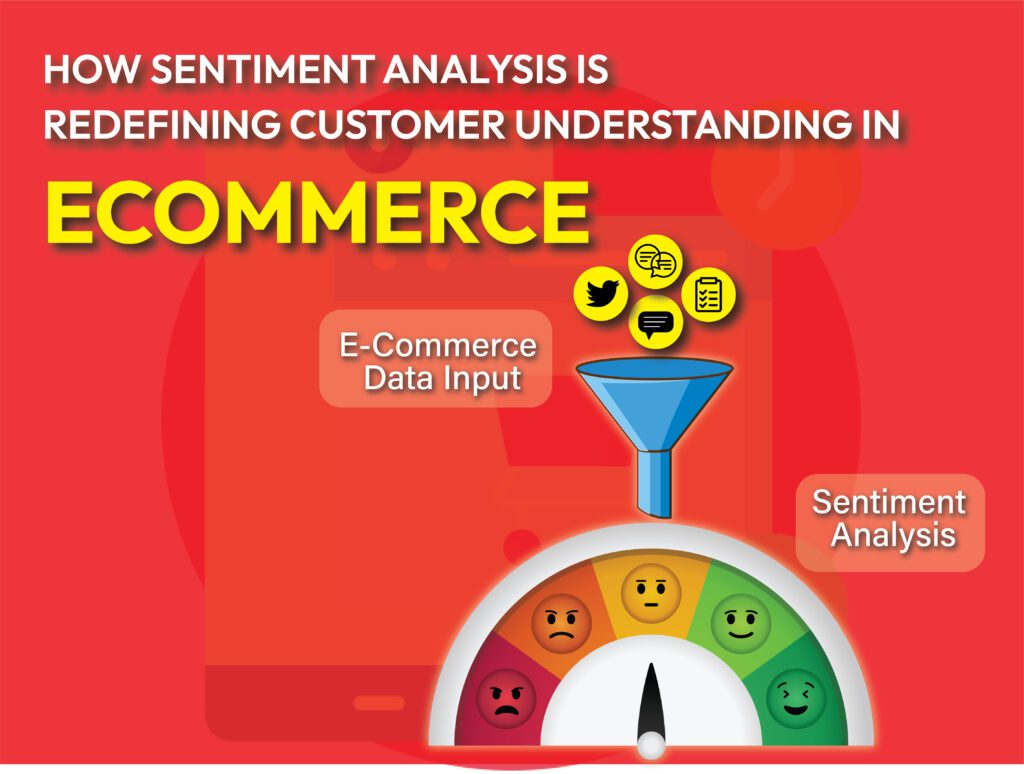
Socials funnel distinguishing positive, negative, and neutral sentiments

How Sentiment Analysis Is Redefining Customer Understanding in eCommerce

The Competitive Advantage of Knowing Your Customers Better: Through Data Introduction In the hyper-competitive landscape of modern e-commerce, everything is dictated by customers. From product niches and quality standards to the choice of material, price, and stocks, all are regulated by customer ratings, preferences, behavior, and changing needs. In fact, product quality is directly proportional to customer expectations. Product selection is directly proportional to the demand by the customer. Whether a business belongs to textiles, electronics, beauty, stationery, home improvement, or lifestyle, there is one core principle common among all successful e-commerce operations: Know your customers’ needs and build your growth strategy around them. Today’s digital consumers are more expressive, better informed, and choosier than ever. They leave behind them a trail of reviews, reactions, searches, clicks, and sentiment cues that reveal what truly matters. Companies that capture and analyze that information have secured a decisive competitive advantage, while their dismissal of such information risks making them irrelevant. This is the reason why the central agenda of modern e-commerce revolves around the simplest and most powerful truth: How well you understand your customers determines your growth. Brands that listen grow faster. Brands that analyze grow smarter. And brands that act on customer insights lead the race always. Modern consumers leave behind a digital footprint at every turn: that could be product views, wish lists, reviews, search patterns, abandoned carts, ratings, or social conversations. In fact, this makes customer data the most valuable currency in the digital retail world. Amongst all types of data driving decision-making today, sentiment-based insights have emerged as the most robust. They reveal not just what customers want but how they feel, and in e-commerce, feelings directly impact buying behavior. This is where Scraping Solution delivers a competitive advantage. The Power of Sentiment Analysis in eCommerce What is Sentiment Analysis? Sentiment analysis, or opinion mining, can be described as the task of analysis, extraction, and measurement of subjective information contained within text and, increasingly, speech and multimedia. The objective here would be to identify and measure emotional polarity concerning emotions such as happiness or anger, or even at an aspect level, which may pertain to service as opposed to product. Within academic and business literature, sentiment analysis can be understood as “Computational analysis involving people’s opinions, sentiments, appraisals, attitudes, and emotions expressed via written text.” Sentiment Analysis in terms of e-Commerce Talking about eCommerce, sentiment analysis can be understood as a method that employs NLP and machine learning algorithms to decode customer reviews and text-based responses and analyze them for understanding emotions and specific statements about product features. Also known as “opinion mining,” it tries to classify customer responses as either positive, negative, or neutral. At the same time, it tries to unveil more meaningful insights related to customer perceptions of product quality, customer experiences with deliveries, satisfaction with prices, and personal preferences. All these have very critical implications for eCommerce businesses because customer responses and reactions about their needs and frustrations are reflected in reviews on product pages, much before they are manifested in purchases and customer exits. Their impact directly contributes to product demand, market position, and price stability. Those business houses and eCommerce enterprises that gain an understanding of customer sentiment ahead of the competition have an unbeatable edge and can focus on enhancing customer satisfaction. These insights answer critical questions such as, In short, we can say that sentiment analysis reveals the “WHY” behind customer actions. Businesses use these insights to: Why It Matters: The Role of Preference as the New Market Advantage User preferences include: We witnessed it within our case study on Yunus Textile, and we noticed that once they associated their brands with customer preferences, there were significant conversions. It shows what customers want; businesses just need access to the appropriate data. At Scraping Solution, exactly that is what we offer: real-time insights about customer preferences that enable brands to develop products that people already want. How Scraping Solution Stands Out Scraping Solution is more than a scraping service provider because we serve as your end-to-end data backbone. Ranging from your data extraction and data cleaning service provider to your sentiment intelligence engine, market trend radar, and automation partner, we have your back at every stage of today’s data value chain. However, what makes us special as a data solution service provider is that we offer you capabilities for real-time data pipeline services, AI-driven insights and analysis, clean and structured datasets, and updates as per your business needs, because meaningful insights start with trustworthy data. Scraping Solution acts as both A bridge between supplier and retailer ecosystems & A data intelligence layer that turns customer voice into business value. Our sentiment pipeline is optimized for high-volume, multi-platform environments; multi-language review streams; real-time syncing; and scalable integration with retail management systems. We don’t just provide data: we provide clarity for smarter decisions. Conclusion Sentiment analysis is no longer a “nice-to-have”; it is the backbone of intelligent eCommerce decision-making. In today’s ever-changing business world with constantly shifting customer demands, businesses that crack the code on customer sentiment have an unparalleled competitive advantage. Scraping Solution enables retail businesses to connect data, gain insights about customers, and make decisions with accuracy and precision.

How Brands Use Web Scraping to Track Prices Across Global Marketplaces

In the borderless eCommerce economy of today, price is one of the most important elements that make or break a customer’s decision to buy your product or that of a competitor. With platforms such as Amazon, Alibaba, eBay, and Flipkart carrying millions of listings, brands often struggle to track how their products and those of their competitors are priced across different regions, making price monitoring a constant challenge. For global brands, manual tracking of these changes is not only inefficient but impossible. That is where web scraping has emerged as a go-to solution for international brands. In this article, we’ll explore the complete landscape of price tracking and its role in shaping eCommerce strategy. We’ll start by understanding why brands track prices across platforms and how it directly affects their revenue and competitiveness. Then, we’ll uncover how web scraping powers price tracking, exploring the tools, methods, and automation that enable it. We’ll also look at the complexity and data variety across global marketplaces, highlighting the technical challenges involved. From there, we’ll examine what types of data are collected and how this information fuels actionable business insights. Finally, we’ll discuss the real-world business impact and wrap up with the challenges and best practices that ensure accuracy, compliance, and scalability in price tracking systems.   Why Brands Track Prices Across Platforms Price tracking enables brands to stay competitive and profitable in an ever-changing digital market. Whether monitoring competitors’ discounts, understanding regional price differences, or adjusting in real-time to supply and demand, it’s the continuous and accurate tracking that makes sure businesses do not miss opportunities or erode margins. For instance: A brand on Amazon can track how rival sellers change prices during seasonal events. One can monitor the trend of international buyers on Alibaba and accordingly adjust their exports. Retailers can optimize pricing strategies across regions without losing visibility. In other words, tracking is no longer optional; it’s the backbone of eCommerce intelligence.   How Web Scraping Powers Price Tracking Web scraping can automate the process of gathering product prices, SKUs, availability, and promotions through hundreds or thousands of product listings on multiple websites. Scraping Solution utilizes tools like Python, Selenium, and APIs to create structured pipelines that fetch, clean, and deliver pricing data continuously in real time. The process looks like this: Identify Target URLs: Pages from marketplaces like Amazon, Alibaba, eBay, or Shopify-based stores. Extract Key Elements: Product title, price, discount, stock status, and seller name. Normalize Data: Standardize the currency, handle missing values, and remove duplicates. Deliver Insights: Export data in dashboards, APIs, or CSVs for analysis. This automated cycle lets brands monitor pricing shifts on an hourly basis, not monthly, and make agile responses. Platform Complexity and Data Variety Tracking across Amazon or Alibaba is not straightforward. Each of these platforms builds up its pages differently, using dynamic elements, while very often prices are hidden behind filters or JavaScript-loaded components. This means that generic scrapers fail fast, whereas custom scraping systems adapt to platform architecture for accuracy and reliability. Our systems handle: Multilingual listings Dynamic prices rendered by JavaScript Currency conversions Variations at the seller level: FBA vs third-party Product bundles and promotional pricing This adaptability ensures that no crucial pricing detail falls through the cracks.   What Data Is Collected Full price tracking scraper captures: Product titles and URLs Current and historical prices Discount percentages Stock status and availability Seller IDs and regions Date/time of last update Visualized, this information uncovers pricing trends, competitor moves, and market health in a go-to view that enables decision-makers to move with speed and accuracy. How It Translates into Business Impact Accurate price tracking fuels several key areas: Competitive Pricing: Dynamically adjust the prices to stay ahead of the competition. Revenue Optimization: Using real data so as not to under- or over-price. Product Strategy: Identify profitable regions or demand spikes. Brand Protection: Identify unauthorized sellers or inconsistent listings. Through visibility into the markets, the brands can make decisions based on facts, rather than estimates. Challenges and Best Practices Even with automation, price tracking faces some problems: Web structures tend to change often, so scrapers need maintenance. Some data is behind authentication or dynamic rendering. Scaling requires robust proxies and IP rotation systems. Scraping Solution, therefore, counts on best practices from ethical scraping protocols to strong data validation for clean, compliant, and real-time outputs. Scraping Solution: The Digital Bridge for Real-Time Market Insight  At Scraping Solution, we act as the digital bridge between marketplaces and decision-makers. Our scraping infrastructure turns chaotic, scattered pricing data into clean, connected insights. With our systems, brands don’t just monitor prices; they understand them. In eCommerce, each second counts, and with Scraping Solution, each second is tracked, analyzed, and optimized.