Lead Generation

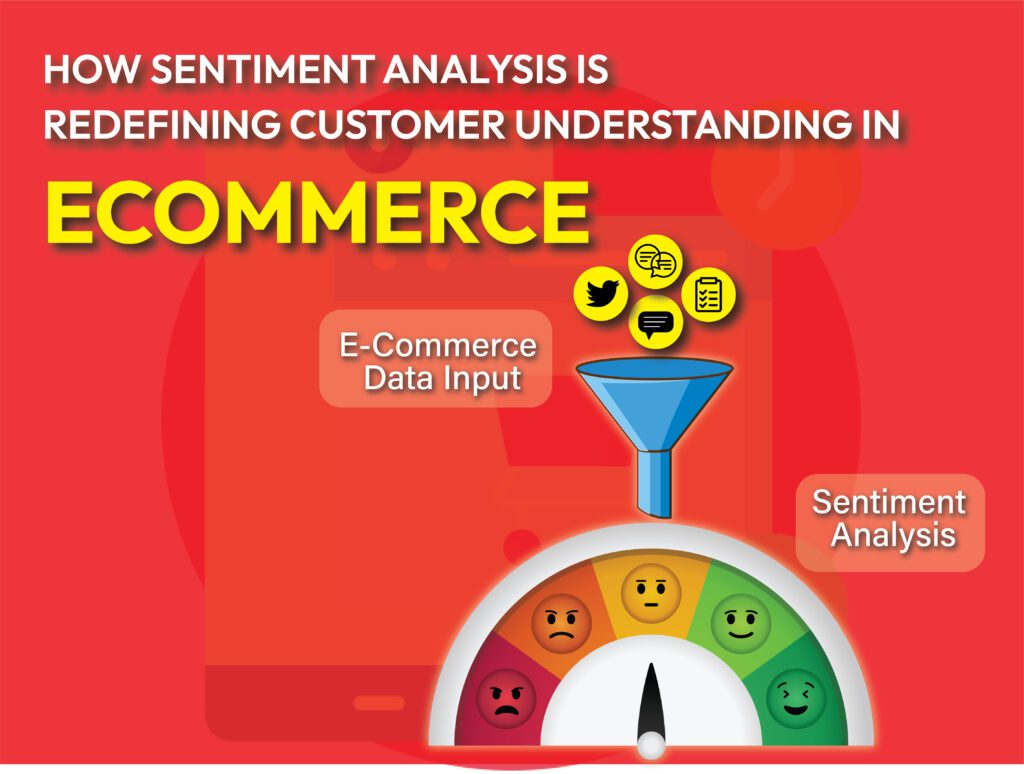
Socials funnel distinguishing positive, negative, and neutral sentiments

How Sentiment Analysis Is Redefining Customer Understanding in eCommerce

The Competitive Advantage of Knowing Your Customers Better: Through Data Introduction In the hyper-competitive landscape of modern e-commerce, everything is dictated by customers. From product niches and quality standards to the choice of material, price, and stocks, all are regulated by customer ratings, preferences, behavior, and changing needs. In fact, product quality is directly proportional to customer expectations. Product selection is directly proportional to the demand by the customer. Whether a business belongs to textiles, electronics, beauty, stationery, home improvement, or lifestyle, there is one core principle common among all successful e-commerce operations: Know your customers’ needs and build your growth strategy around them. Today’s digital consumers are more expressive, better informed, and choosier than ever. They leave behind them a trail of reviews, reactions, searches, clicks, and sentiment cues that reveal what truly matters. Companies that capture and analyze that information have secured a decisive competitive advantage, while their dismissal of such information risks making them irrelevant. This is the reason why the central agenda of modern e-commerce revolves around the simplest and most powerful truth: How well you understand your customers determines your growth. Brands that listen grow faster. Brands that analyze grow smarter. And brands that act on customer insights lead the race always. Modern consumers leave behind a digital footprint at every turn: that could be product views, wish lists, reviews, search patterns, abandoned carts, ratings, or social conversations. In fact, this makes customer data the most valuable currency in the digital retail world. Amongst all types of data driving decision-making today, sentiment-based insights have emerged as the most robust. They reveal not just what customers want but how they feel, and in e-commerce, feelings directly impact buying behavior. This is where Scraping Solution delivers a competitive advantage. The Power of Sentiment Analysis in eCommerce What is Sentiment Analysis? Sentiment analysis, or opinion mining, can be described as the task of analysis, extraction, and measurement of subjective information contained within text and, increasingly, speech and multimedia. The objective here would be to identify and measure emotional polarity concerning emotions such as happiness or anger, or even at an aspect level, which may pertain to service as opposed to product. Within academic and business literature, sentiment analysis can be understood as “Computational analysis involving people’s opinions, sentiments, appraisals, attitudes, and emotions expressed via written text.” Sentiment Analysis in terms of e-Commerce Talking about eCommerce, sentiment analysis can be understood as a method that employs NLP and machine learning algorithms to decode customer reviews and text-based responses and analyze them for understanding emotions and specific statements about product features. Also known as “opinion mining,” it tries to classify customer responses as either positive, negative, or neutral. At the same time, it tries to unveil more meaningful insights related to customer perceptions of product quality, customer experiences with deliveries, satisfaction with prices, and personal preferences. All these have very critical implications for eCommerce businesses because customer responses and reactions about their needs and frustrations are reflected in reviews on product pages, much before they are manifested in purchases and customer exits. Their impact directly contributes to product demand, market position, and price stability. Those business houses and eCommerce enterprises that gain an understanding of customer sentiment ahead of the competition have an unbeatable edge and can focus on enhancing customer satisfaction. These insights answer critical questions such as, In short, we can say that sentiment analysis reveals the “WHY” behind customer actions. Businesses use these insights to: Why It Matters: The Role of Preference as the New Market Advantage User preferences include: We witnessed it within our case study on Yunus Textile, and we noticed that once they associated their brands with customer preferences, there were significant conversions. It shows what customers want; businesses just need access to the appropriate data. At Scraping Solution, exactly that is what we offer: real-time insights about customer preferences that enable brands to develop products that people already want. How Scraping Solution Stands Out Scraping Solution is more than a scraping service provider because we serve as your end-to-end data backbone. Ranging from your data extraction and data cleaning service provider to your sentiment intelligence engine, market trend radar, and automation partner, we have your back at every stage of today’s data value chain. However, what makes us special as a data solution service provider is that we offer you capabilities for real-time data pipeline services, AI-driven insights and analysis, clean and structured datasets, and updates as per your business needs, because meaningful insights start with trustworthy data. Scraping Solution acts as both A bridge between supplier and retailer ecosystems & A data intelligence layer that turns customer voice into business value. Our sentiment pipeline is optimized for high-volume, multi-platform environments; multi-language review streams; real-time syncing; and scalable integration with retail management systems. We don’t just provide data: we provide clarity for smarter decisions. Conclusion Sentiment analysis is no longer a “nice-to-have”; it is the backbone of intelligent eCommerce decision-making. In today’s ever-changing business world with constantly shifting customer demands, businesses that crack the code on customer sentiment have an unparalleled competitive advantage. Scraping Solution enables retail businesses to connect data, gain insights about customers, and make decisions with accuracy and precision.

MCP Servers for Web Scraping | Power, Pitfalls, and Practical Challenges

How MCP Servers for Web Scraping Improve Data Extraction Data is the push factor for today’s innovation, decision-making, and advancement. Every industry from healthcare to education, from business to governance, is influenced by data as it enables smarter insights, efficiency, and personalized experiences. It is proven that data empowers humanity to make informed decisions, foster economic growth, and improve quality of life on a global scale. Now the future belongs to those who can collect, analyze, and leverage data effectively transforming raw information into actionable knowledge that benefits society. Due to the immense need for data extraction, businesses and researchers are looking to gather substantial amounts of information by leveraging web scraping solutions to capture data from websites efficiently to capture data from websites efficiently without the need for manual extraction that requires intense labor work. With the passage of time web environments are growing more complex and traditional web scraping methods are failing to provide the required results. Significant issues that web scraping must face are the anti-scraping measures such as CAPTCHAs, IP bans, and rate limiting. At this point, Multi-Channel Processing (MCP) Servers become a vital component and demonstrate their value. These servers not only enhance web scraping by distributing requests across multiple channels but also reduce risk of detection and improving efficiency. At Scraping Solution, our team has extensively worked with Multi-Channel Processing (MCP) servers as part of our regular web scraping services. While we have been leveraging the power and flexibility of these servers in both static and dynamic channeling contexts, we felt it essential to go beyond mere usage and explore the underlying architecture and strategic value they bring to modern scraping workflows. This blog serves not just as an introduction but as a practical knowledge-sharing piece for those who are either new to web scraping or looking to enhance their current infrastructure. We will observe how they play such an enormous role in effective web scraping, also we will observe challenges and limitations of MCP servers and the difference between Manual Process Distribution vs. Dynamic Work Distribution. What Are MCP Servers? Multi-Channel Processing Servers as from the term ‘multi’ are high-performance computing environment systems that are designed to process and manage multiple streams of data simultaneously. These servers are efficient in distributing workloads across multiple cores or machines. They maximize request distribution through the utilization of various IP addresses, user agents, and session management strategies to simulate organic user behavior. How MCP Servers Improve Web Scraping As in the previous section we have explained that web scraping encounters problems such as: IP blocking, CAPTCHAs, and Rate Limiting. So, MCP servers address these challenges by providing minimal solutions such as: 1. Distributing Requests Across Multiple IPs Through IP rotation, MCP servers render it challenging for websites to identify and block scraping attempts. 2. Mimicking Human Behavior Employing randomized delays, mixed user agents, and natural click patterns to prevent triggering anti-bot systems. 3. Enhancing Speed and Reliability Parallel processing enables MCP servers to scrape data at a faster rate with high success rates. 4. Handling Failures Gracefully When a channel fails (e.g., because of an IP ban), the system will automatically be fallback to an alternative one without breaking the scraping process. In web scraping, MCP servers increase data extraction speed, avoid bottlenecks, and provide stable task execution using multi-threading and multi-processing methods. With advantages there are several challenges and drawbacks of MCP Servers. Challenges and Drawbacks 1. Complexity: Requires careful management of processes to avoid deadlocks and race conditions. 2. Higher Resource Consumption: More threads and processes demand increased CPU and RAM usage. 3. IP Rotation & Anti-Bot Challenges: High parallelization can trigger bot-detection mechanisms, requiring robust anti-blocking techniques. Although MCP servers have enormous influence on web scraping by overcoming  anti-bot measures, they still lack dealing with IP bans, CAPTCHAs, and  adaptive website defenses. This is where professional automation and scraping services can make a difference. To further enhance resilience and efficiency, scrapers need to consider how tasks are allocated whether through manual process allocation or dynamic work distribution. Manual Process Distribution vs. Dynamic Work Distribution While MCP servers assist in overcoming most web scraping hurdles, task distribution between servers and proxies is what matters in terms of efficiency and success rates. Two primary methods exist: Manual Process Distribution and Dynamic Work Distribution. Both have their own pros and cons based on scraping needs. Manual Process Distribution Manual Process Distribution refers to assigning scraping tasks to specific proxies or channels based on predefined rules. The distribution remains static unless manually reconfigured. This process is easy to set with minimal coding and rotation of proxy. Suits well for small-scale scraping with regular website structures.  Facilitates manual optimization per task or geolocations. With the benefits, also come the drawbacks. This approach’s efficiency varies upon workloads, it can’t dynamically adjust based on system resources. Also, resources are wasted if the process is completed before the expected time and remains idle. Manual Process Distribution is best for small scale projects having low frequency scraping and are good for highly predictable targets. Dynamic Work Distribution This method employs smart algorithms to dynamically distribute tasks according to real-time parameters such as proxy health, response rate, and success rate. This approach is adaptive and resilient as it automatically shifts tasks if a proxy fails or gets blocked. It manages resource utilization and loads balance across all available proxies for optimal throughput. It is ideal for large-scale scraping with constantly changing conditions. The drawbacks of Dynamic Work Distribution involve complex systems that require advanced logics. The need for robust infrastructure and monitoring systems led to higher initial cost. There could be slight latency due to real-time decision-making. Dynamic Work Distribution is appropriate for large-scale scraping projects with high-frequency data extraction processes and targeting with aggressive anti-bot measures. Infrastructure Overview of MCP Servers in Web Scraping Automation At Scraping Solution, we deploy a well-structured MCP (Multi-Channel Processing) infrastructure designed to handle high-volume data extraction with resilience, speed, and adaptability. These servers are built on a distributed architecture that supports both manual and dynamic channel allocation, ensuring efficient task distribution even under heavy load. Each MCP node operates as an isolated scraping agent, connected to a central task scheduler and database. This setup not only prevents bottlenecks but also allows seamless scaling based on workload. Channels can be dynamically assigned based on target website complexity, anti-bot measures, and expected latency. Redis is employed for in-memory task queues, while Docker containers isolate each scraper environment for consistency and

Top global web scraping companies for data extraction and automation

Top 5 Web Scraping Service Providers Globally

Leading Web Scraping Companies Transforming Data Extraction The New Oil in Today’s Digital Economy is Data Businesses in the urge of utilizing data driven decision making need to effectively extract, analyze and utilize vast amounts of data. Here, web scraping services emerge as a crucial tool, by extracting vast amounts of publicly available data from websites. From the scraped data companies can uncover insights, track competitors, monitor market trends, and optimize their strategies to gain a competitive edge. Several companies are leading the charge in web scraping technologies and services all around the globe. The UK is home to a thriving tech ecosystem, playing a front role in data revolution, with several companies leading the charge in web scraping technologies and services. This article delves into the importance of web scraping in this digital age, the leading web scraping companies, their services, and how they are driving innovation in the field of data intelligence and data extraction. Top Web Scraping Companies The world is becoming “a hub for the companies that generate valuable insights from raw data” and it’s hard to choose the right and reliable ones. Below mentioned companies are marked top web scraping companies across the globe for their innovation, market research, accuracy, and efficiency. 1. Scraping Solution – The Specialist in Tailored Web Scraping Scraping Solution is a global leader in custom web scraping services, data extraction, and automation services. With over a decade of experience and thousands of successful projects, Scraping Solution has mastered the art of bypassing anti-bot mechanisms, handling complex websites, and delivering scalable, high-quality data to businesses worldwide. Check out the full range of services Scraping Solution offers here. Why Scraping Solution? Expertise in extracting data from eCommerce, real estate, finance, and B2B directories. Advanced anti-detection techniques, handling CAPTCHAs, proxies, and dynamic content. API integration for real-time data updates. Scalable solutions tailored to individual business needs. Strict compliance with data privacy regulations. Industries Served:E-commerce, Marketplaces, Finance, Lead Generation, B2B, Small Businesses, Competitive Intelligence. 2. Import.io Founded by Andrew Fogg and David White in 2012, a California based company that extracts data from websites. The Import.io engagement process regarding data extraction works upon the following steps: Project Kickoff Solution Design Project Delivery Ongoing Support Import.io Working Methodology The company does not compromise on the quality of data; their main goal is to deliver accurate, complete, reliable, and high-quality data at scale for customers. Moving forward with the motive that, “Data quality assurance is a key component of the managed service offering.” To make web data extraction easy, accurate, and worry free, Import.io takes several measures such as: Training the Extractor on Multiple Pages for better accuracy. After saving the extractor, optimizing and running it in the shortest period. Using patterns such as page numbers and category names to automatically generate all the required URLs in seconds. Excels in automatically detecting Paginated Lists. Compliance and accuracy through Website Screenshots. Assists in extracting authenticated data available only after logging in. Extracts images and documents with the rest of the data. Provides interactive workflows like navigating between pages, entering a search term, or changing sort order. Leverages machine learning auto-suggest for point and click training. 3. Scrapy (Anaconda) – Open-Source Web Scraping Framework Scrapy is a widely used open-source web crawling framework for Python, managed under the Anaconda ecosystem. It is ideal for developers and businesses that prefer in-house data extraction solutions. Why Scrapy? Fully customizable for advanced web scraping projects. Fast and efficient scraping with built-in asynchronous processing. Strong community support with regular updates. Great for machine learning and data science applications. Industries Served:Tech Startups, Data Science, AI/ML Development, Research Institutions. 4. Apify – Automation-Driven Web Scraping Apify offers a powerful cloud-based platform for web scraping, automation, and data processing. Its marketplace provides pre-built automation bots for scraping websites without extensive coding. Why Apify? Cloud-based infrastructure for large-scale data collection. Pre-built actors for scraping popular websites. Headless browser scraping with Puppeteer and Playwright. API integrations for seamless workflow automation. Industries Served:Retail, E-commerce, Marketing Intelligence, Startups. 5. Web Scraper IO – No-Code Web Scraping Tool Web Scraper IO is a Chrome extension-based web scraping solution that allows users to extract data from websites without writing code. It’s an excellent option for beginners and businesses that need quick data collection. Why Web Scraper IO? User-friendly, no technical skills required. Works directly within the browser. Affordable and accessible for small businesses. Offers cloud scraping for scheduled data extraction. Industries Served:Small Businesses, Digital Marketing, Research & Analysis. Conclusion Choosing the right web scraping provider depends on your business needs. If you’re looking for a custom-tailored, scalable, and compliance-driven solution, Scraping Solution is a top choice. Companies needing automated and large-scale scraping can benefit from Apify, while Scrapy serves developers looking for flexibility. Web Scraper IO is best for non-technical users who need quick, easy solutions. No matter which route you choose, having a strong web scraping strategy will unlock data-driven success in today’s competitive digital landscape.

A Comprehensive Analysis of Lead Generation Strategies

A Comprehensive Analysis of Lead Generation Strategies In the dynamic landscape of modern business, the art and science of lead generation stand as a linchpin for organizations aspiring to thrive and excel. Lead generation is not merely a process; it is a strategic imperative that fuels the engine of growth, connecting businesses with their most promising prospects. Scraping Solution researchers have developed a guide for businesses struggling in sales or those exploring lead generation but finding it hard to start. As we embark on a journey to unravel the depths of lead generation, it becomes evident that this multifaceted approach is the lifeblood of sales and marketing, orchestrating a symphony of interactions between businesses and potential customers. Defined by its ability to capture and convert interest into tangible opportunities, lead generation is the cornerstone upon which successful enterprises build their foundations. This intricate dance between attracting and engaging prospects, seamlessly guiding them through the buyer’s journey, is an essential conduit for transforming curiosity into commitment. At its essence, lead generation transcends the conventional paradigm of marketing; it is an ecosystem where data, strategy, and innovation converge to create a pathway to sustainable business growth. In this exploration, we will dissect the very fabric of lead generation, understanding its nuances, unraveling its significance, and dissecting the key factors that propel it from a concept to a catalyst for success. The journey begins by defining lead generation in its purest form – a process that goes beyond the transactional and taps into the relational. It is a symphony of methodologies that harmonize to create resonance with the audience, fostering a connection that transcends the transactional and evolves into a lasting relationship. As we traverse through this definition, we will peel back the layers to reveal the intricacies that make lead generation a dynamic force, capable of shaping the destiny of businesses across industries. However, understanding the definition is merely the prelude to a much grander symphony. The importance of lead generation cannot be overstated, for it is the compass that guides businesses through the turbulent seas of competition, uncertainty, and ever-evolving consumer behavior. Like a North Star, lead generation provides direction, ensuring that efforts and resources are invested where they matter most, yielding a bountiful harvest of qualified prospects ripe for conversion. As we delve deeper into this exploration, we will conduct a comprehensive analysis of the key factors that underpin successful lead generation. From identifying the elusive target audience to crafting compelling content, optimizing for search engines, leveraging the power of social media, and fine-tuning the art of conversion rate optimization, each factor contributes to the symphony, creating a harmonious blend that resonates with potential customers. In the intricate tapestry of lead generation, one thread stands out as a beacon of personalized connection – email marketing campaigns. A time-tested and ever-evolving strategy, email marketing remains an integral chapter in the lead generation playbook. In this analysis, we will unravel the intricacies of crafting effective email campaigns, exploring how this direct communication channel can be harnessed to not only capture attention but also nurture relationships and guide prospects along the conversion journey. In the pages that follow, we will embark on a comprehensive journey through the realms of lead generation, exploring its definition, understanding its importance, dissecting key factors, and shedding light on the pivotal role of email marketing campaigns. As we unravel the complexities and intricacies, we invite you to join us in unlocking the potential of lead generation – a gateway to sustainable business growth, where strategies are forged, connections are made, and success becomes more than an aspiration; it becomes a tangible reality. Definition of Lead Generation Lead generation can be defined as the process of attracting and converting prospects into potential customers. It involves capturing the interest of individuals or businesses in a product or service, with the ultimate goal of nurturing them into qualified leads. This multifaceted process spans various channels, strategies, and tactics that collectively contribute to the growth and success of a business. Importance of Lead Generation Lead generation is fundamental to the success of any business for several reasons. Firstly, it fuels the sales pipeline by identifying and engaging potential customers who have expressed interest in a product or service. This targeted approach enables businesses to focus their efforts on individuals or entities that are more likely to convert, resulting in a higher return on investment. Secondly, lead generation fosters brand awareness and establishes a positive relationship with the target audience. By implementing effective lead generation strategies, businesses can position themselves as industry leaders, gaining trust and credibility among their potential customer base. Lead Generation Analysis: Key Factors 1. Target Audience Identification Successful lead generation begins with a clear understanding of the target audience. Analyzing demographics, psychographics, and behaviors allows businesses to tailor their strategies to resonate with the specific needs and preferences of their ideal customers. 2. Content Marketing and SEO Content marketing plays a pivotal role in attracting and nurturing leads. Quality content, optimized for search engines, not only increases visibility but also positions a business as an authoritative source in its industry. This section will explore the symbiotic relationship between content marketing, search engine optimization (SEO), and lead generation. (External link for authority): Learn more about SEO best practices for UK businesses on Search Engine Journal UK. 3. Social Media Engagement The pervasive influence of social media cannot be overlooked in the lead generation landscape. Effective use of platforms like LinkedIn, Facebook, and Twitter can significantly enhance brand visibility, engagement, and lead acquisition. We will examine strategies for leveraging social media to generate and nurture leads. 4. Conversion Rate Optimization (CRO) Conversion rate optimization focuses on refining the user experience to increase the likelihood of converting leads into customers. This section will explore the importance of user-friendly website design, compelling calls-to-action, and effective landing pages in maximizing conversion rates. Email Marketing Campaigns 1. Overview of Email Marketing in Lead Generation Email marketing remains a cornerstone of lead generation strategies, offering